

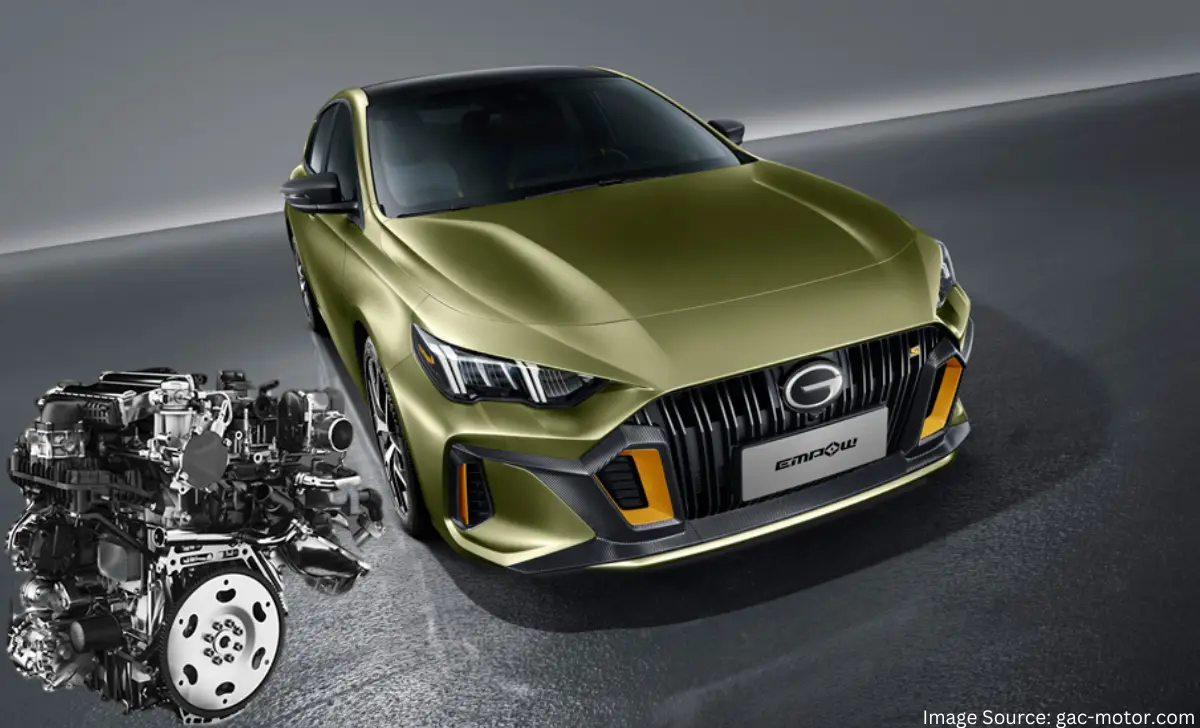

Toyota has been at the forefront of alternative fuel technologies for decades. Recently, the automaker has made headlines with its latest innovation: the ammonia engine. This groundbreaking technology promises to be a game-changer in the quest for sustainable transportation.
In this article

Toyota’s vision is to extend the use of ammonia engines from ships, airliners, trucks, and trains to passenger cars. The company has partnered with Chinese manufacturer GAC to develop a prototype engine that burns liquid ammonia. The engine produces zero CO2 emissions and is 90% cleaner than gas-powered engines. The ammonia engine is a significant step towards achieving Toyota’s goal of reducing carbon emissions and promoting sustainable transportation.
Key Takeaways
- Toyota has developed a revolutionary ammonia engine that produces zero CO2 emissions and is 90% cleaner than gas-powered engines.
- The ammonia engine has the potential to extend the use of ammonia engines from ships, airliners, trucks, and trains to passenger cars.
- Toyota’s ammonia engine is a significant step towards achieving the company’s goal of reducing carbon emissions and promoting sustainable transportation.
Toyota’s Vision
Toyota has always been committed to environmental sustainability, and their latest innovation in engine technology is a testament to that. The company has partnered with Chinese manufacturer GAC to develop a prototype engine that burns liquid ammonia, which they believe will be a game-changer in sustainable transportation.
Commitment to Environmental Sustainability
Toyota has long been a leader in the automotive industry when it comes to environmental sustainability. They were the first company to introduce a mass-produced hybrid vehicle, the Prius, in 1997. Since then, they have continued to invest in alternative fuel technologies, including hydrogen fuel cells and now ammonia engines.
By developing an engine that burns liquid ammonia, Toyota hopes to reduce carbon emissions and improve air quality. Liquid ammonia is a clean-burning fuel that produces almost no carbon emissions when burned. This makes it an attractive alternative to gasoline and diesel, which are major contributors to air pollution and climate change.
The Toyota Century SUV is a luxury vehicle that competes in the same space as the Rolls-Royce Cullinan.
Innovation in Engine Technology
Toyota’s partnership with GAC has resulted in the development of a prototype engine that produces 161 horsepower and emits 90% fewer carbon emissions than its gas-powered counterpart. The engine is a 2.0-liter four-cylinder that is capable of running on either gasoline or liquid ammonia.
The engine works by mixing liquid ammonia with air, which creates a clean-burning fuel that powers the engine. The ammonia is stored in a specially designed tank that is kept at a low temperature to prevent it from evaporating. The engine is also equipped with a catalytic converter that reduces nitrogen oxide emissions, which are a major contributor to air pollution.
In conclusion, Toyota’s vision for a sustainable future is one that is powered by innovative engine technologies like the liquid ammonia engine. By continuing to invest in alternative fuel technologies, Toyota is helping to reduce carbon emissions and improve air quality for future generations.
Understanding Ammonia As a Fuel
Ammonia is a colorless gas that is composed of nitrogen and hydrogen molecules. It is commonly used in the production of fertilizers, but it can also be used as a fuel source. In recent years, there has been an increased interest in using ammonia as a fuel due to its potential as a renewable energy source.
Properties of Ammonia
Ammonia has several properties that make it a promising fuel source. First, it is a clean-burning fuel that does not produce carbon dioxide when burned. This makes it an attractive alternative to traditional fossil fuels, which are major contributors to greenhouse gas emissions. Second, ammonia has a high energy density, which means that it can store a large amount of energy in a small volume. Finally, ammonia is relatively easy to produce and transport, which makes it a practical fuel option.
However, there are also some challenges associated with using ammonia as a fuel. One of the main challenges is that ammonia is highly toxic and can be dangerous to handle. In addition, ammonia is not currently widely available as a fuel, which means that there would need to be significant investments in infrastructure to support its use.
Benefits and Challenges
Despite the challenges associated with using ammonia as a fuel, there are several potential benefits. For example, using ammonia as a fuel could help to reduce greenhouse gas emissions and mitigate the effects of climate change. In addition, ammonia can be produced from renewable energy sources such as wind and solar power, which would further reduce its environmental impact.
However, there are also several challenges that need to be addressed before ammonia can be widely used as a fuel. These challenges include developing safe and efficient storage and transportation methods, as well as building the necessary infrastructure to support its use. Overall, while there are both benefits and challenges associated with using ammonia as a fuel, it has the potential to be an important renewable energy source in the future.
The Ammonia Engine
The ammonia engine is a new type of engine that uses ammonia as its primary fuel source. The engine is designed to be more efficient and environmentally friendly than traditional gasoline engines. Toyota has been at the forefront of developing this new technology, partnering with Chinese manufacturer GAC to create a prototype engine that burns liquid ammonia.
Mechanics of the Ammonia Engine
The mechanics of the ammonia engine are similar to those of a traditional gasoline engine. The engine is a four-cylinder, two-liter engine that produces 161 horsepower. However, instead of using gasoline as its fuel source, the engine burns liquid ammonia. The ammonia is stored in a tank and injected into the engine, where it is burned to produce power.
One of the benefits of the ammonia engine is that it produces significantly fewer carbon emissions than a traditional gasoline engine. According to GAC, the ammonia engine emits 90% less carbon than a gasoline engine. This makes it a much more environmentally friendly option for powering vehicles.
Toyota’s Unique Approach
Toyota’s approach to developing the ammonia engine has been unique. Rather than focusing solely on passenger cars, Toyota has recognized the potential of ammonia as a clean and efficient fuel for a variety of applications. The company has partnered with GAC to develop ammonia engines for ships, airliners, trucks, and trains, in addition to passenger cars.
Toyota’s groundbreaking work on the ammonia engine has the potential to revolutionize the automotive industry. As more and more consumers demand environmentally friendly vehicles, the ammonia engine could become a popular alternative to traditional gasoline engines.
Impact on the Automobile Industry

The development of Toyota’s ammonia engine has the potential to disrupt the automobile industry, especially in terms of alternative fuel technology. This section will discuss the potential impact of this new technology on the industry.
Potential Market Disruption
The ammonia engine could potentially disrupt the market for electric vehicles (EVs) and other alternative fuel vehicles. While EVs have gained popularity in recent years, they still face challenges such as limited range, long charging times, and high costs. The ammonia engine, on the other hand, offers a longer range and faster refueling times, making it a more convenient option for consumers.
Furthermore, the ammonia engine emits significantly less carbon dioxide compared to gasoline engines, making it a more environmentally friendly option. This could appeal to consumers who are concerned about the environmental impact of their vehicles.
Future Trends
The development of the ammonia engine could also lead to future trends in the automobile industry. For example, the use of ammonia as a fuel could become more widespread, leading to increased demand for ammonia production. This could create opportunities for companies in the chemical and agriculture industries.
Additionally, the development of the ammonia engine could lead to further research and development of alternative fuel technologies. This could result in more efficient and environmentally friendly engines, as well as new types of alternative fuels.
Overall, the development of Toyota’s ammonia engine has the potential to disrupt the automobile industry and lead to new trends in alternative fuel technology. As the technology continues to develop, it will be interesting to see how it impacts the industry and the environment.
Conclusion

In conclusion, Toyota’s ammonia engine has the potential to revolutionize the automobile industry. The partnership with Chinese manufacturer GAC has resulted in a prototype engine that burns liquid ammonia, emitting 90% fewer carbon emissions than its gas-powered counterpart. This engine produces 161 horsepower and is potentially cost-effective in the long run while being ecologically benign.
While Toyota is set to release some exciting EVs next year, it is still exploring other means of energy. The Japanese company believes that all-electric cars are not the only solution to reducing carbon emissions. The ammonia engine is one such alternative that Toyota is exploring.
However, there are still some concerns regarding the use of ammonia as a fuel. Ammonia tends to carry more toxic warning labels than other fuels, and there are concerns about its safety. Additionally, the infrastructure for ammonia fueling stations is not yet in place, which could hinder the widespread adoption of the ammonia engine.
Despite these concerns, Toyota’s ammonia engine is a step in the right direction towards reducing carbon emissions and exploring alternative fuels. As technology advances and infrastructure develops, the ammonia engine could become a viable option for powering automobiles in the future.
Explore our other articles
 Best Cheapest Scooty in India 2023 & 202418 Jan 2021 · 12 min read
 15 Safest Cars in India 2025 | Crash Test Ratings & Safety Features28 Apr 2023 · 9 min read
 Best Bikes Under 1.5 Lakh in India 2025 – Top 10 Picks & Prices8 May 2023 · 8 min read
 Top 10 Best 7-Seater Cars in India: Bringing Families Together1 May 2023 · 14 min read
 Near Bengaluru, a new race track is being built23 Feb 2022 · 2 min read
 Bookings for the Kia Carens are now open; the vehicle will go on sale next month15 Jan 2022 · 2 min read
 Bill Gates Cancels India AI Summit Keynote Hours Before Speech — Epstein Shadow Follows Him to New Delhi19 Feb 2026 · 6 min read
 Global Chip Sales Race Toward $1 Trillion As AI Data Centers Explode6 Feb 2026 · 4 min read
 OpenAI Unveils Frontier AI Agent Service To Win Over Enterprises5 Feb 2026 · 5 min read
 Sandisk soars as AI storage frenzy turns Q2 into a blowout and Q3 into a moonshot30 Jan 2026 · 5 min read
 NVIDIA Earth-2 Open Models Put AI Weather Power In Everyone’s Hands27 Jan 2026 · 5 min read
 Microsoft launches Maia 200 AI chip to rewrite the rules of cloud inference26 Jan 2026 · 4 min read
 EV Thermal Management: Faster Charging, Consistent Performance & Safety26 Jul 2025 · 8 min read
 Automotive Care: Practical Tips for Vehicle Maintenance25 Jan 2025 · 25 min read
 How to use the car air conditioning buttons?19 Oct 2024 · 5 min read
 How to check, replace, and maintain coolant in your vehicle14 Sep 2024 · 4 min read
 10 Powerful Tips to Improve Fuel Efficiency and Save Money12 Jul 2024 · 11 min read
 Learn How to Drive a Manual Car Like an Expert10 Jun 2024 · 22 min read
 Maruti e Vitara TCO India 2026 — Cost of Ownership vs Hyundai Creta Electric17 Jul 2026 · 10 min read
 Mahindra BE 6 Cost of Ownership India 2026 — TCO, Charging Cost & Tata Sierra EV / Harrier EV Verdict16 Jul 2026 · 9 min read
 The 45°C Reality Check: Exactly How Much Range Your EV Loses in the Indian Summer21 Jun 2026 · 12 min read
 The True Cost of Installing a 7.2kW EV Fast Charger at Home (2026)14 Apr 2026 · 12 min read
 MG Comet EV vs. Petrol (Alto K10): The Exact 5-Year Cost Breakdown (2026)8 Apr 2026 · 7 min read
 Tata Punch EV vs Petrol: 5-Year Total Cost of Ownership (2026)5 Apr 2026 · 10 min read
 Upcoming EV Cars & Bikes List 2026: The 30+ Model Guide You Need3 Jan 2026 · 20 min read
 Best Electric Cars for Winter Driving in India 2025 | Family Guide16 Aug 2025 · 12 min read
 Luxury Cars Under ₹1 Crore in Chennai | 2025 Buyer’s23 Jul 2025 · 8 min read
 The Porsche Panamera Redefines Luxury Saloon Segment19 Jul 2024 · 8 min read
 The Most Popular Old Luxury Cars Available in India17 Jun 2024 · 17 min read
 2024 Toyota RAV4 vs RAV4 Prime: A Comprehensive Comparison3 Dec 2023 · 15 min read
