

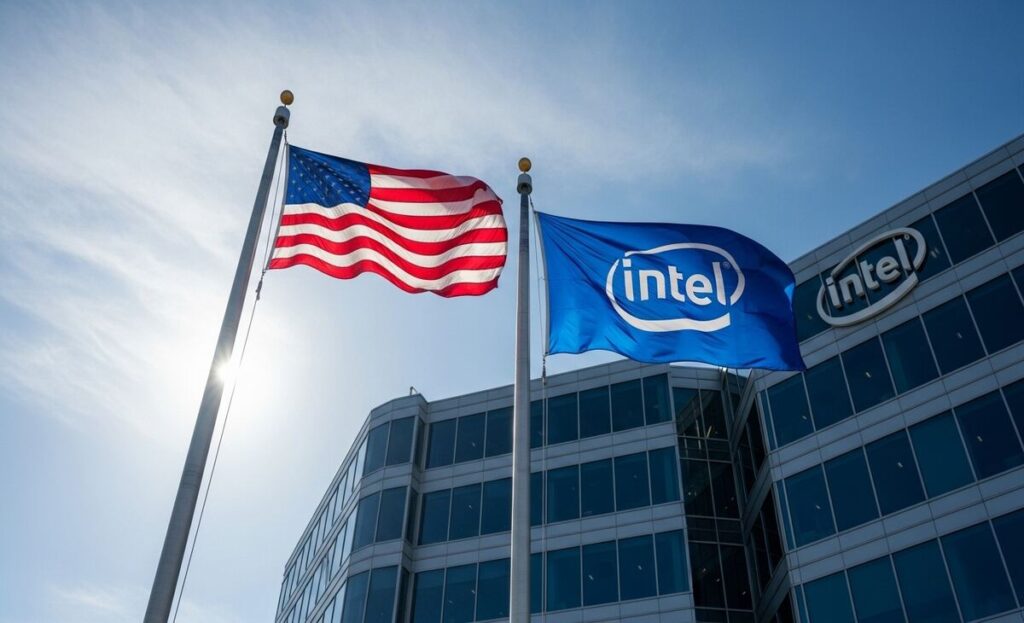

In a landmark development, the United States government has secured a 10% equity stake in Intel Corporation, solidifying one of the largest federal interventions in private industry in recent history. Announced by President Donald Trump on August 22, 2025, this move positions the U.S. as a significant shareholder in the world’s leading semiconductor company—at a time when national tech sovereignty and global supply chain resilience are central to economic and security policy debates.
Background: Corporate Intervention Meets National Strategy
The deal is the culmination of months of negotiations and broader policy recalibrations designed to bolster domestic semiconductor manufacturing. Intel, facing mounting competition and global supply chain disruptions, had been promised nearly $10 billion in government funding under the CHIPS and Science Act and the Secure Enclave program. Trump—criticizing arrangements forged under previous administrations—demanded a transformation of these grants into a tangible equity position for American taxpayers.
Deal Terms: Structure and Funding
The U.S. government will acquire 433.3 million shares of Intel’s common stock, equating to 9.9% ownership at a purchase price of $20.47 per share. This price is nearly $4 below Intel’s closing share price of $24.80 on the day of the announcement, giving taxpayers an immediate paper gain. The $8.9 billion outlay draws from $5.7 billion in outstanding CHIPS Act grants and $3.2 billion from Secure Enclave funding previously earmarked for Intel. After earlier investments, total federal support for Intel now exceeds $11 billion.
Importantly, the stake is passive: the government will not assume any board representation or special information rights and has committed to vote in line with Intel’s Board on all shareholder matters, except under limited circumstances. A five-year warrant also grants the government rights to acquire an additional 5% equity should Intel’s foundry ownership dilute below majority control.
Political and Leadership Dynamics
This intervention follows weeks of public sparring between President Trump and Intel CEO Lip-Bu Tan. Earlier in August, Trump had publicly questioned Tan’s leadership and connections to China. However, after face-to-face meetings and intensive negotiations, the two sides reportedly found “common ground in American interests”—as Trump described it. “He walked in wanting to keep his job and ended up giving us $10 billion for the United States,” Trump stated, highlighting his administration’s hands-on approach and willingness to leverage federal grants for greater control and accountability in critical industries.
Commerce Secretary Howard Lutnick hailed the deal as a “historic agreement” positioning the U.S. as a shareholder championing technology leadership and national security, while Intel emphasized its ongoing commitment to “ensuring the world’s most advanced technologies are American made.”
Market Impact and Industry Response
Intel’s stock surged nearly 6% in regular trading on the day of the announcement, reflecting market optimism over its strengthened capital position and closer national alignment. Analysts note that while the U.S. government now ranks among Intel’s largest shareholders, the absence of direct governance rights is a key safeguard for both corporate independence and policy continuity.
Geopolitical and Industry Context
For India and other major technology markets, this development signals a renewed U.S. commitment to controlling its semiconductor destiny, likely shifting global investment patterns and technology partnerships. With semiconductors central to everything from AI advancement to critical defense infrastructure, the U.S.-Intel deal may prompt similar moves across Asia and Europe.
Outlook and Next Steps
While supporters hail the equity-for-grants model as both innovative and prudent, critics warn of a potential precedent for further direct government stakes in private enterprise. For now, Intel’s U.S. partnership appears poised to accelerate both domestic manufacturing and tech workforce growth, with implications reverberating far beyond Silicon Valley.
(Source: Reuters, Intel, timesofindia)
