



I have been tracking the EV market for three years now. And honestly, 2026 feels different.
For the first time, every major brand is launching something. We are not talking about one or two options anymore. This year, if you want to buy an electric vehicle, you will have real choices across every price point.
I spent the last two months researching every confirmed launch for this year. This list covers 30+ vehicles—from budget cars under ₹10 Lakh to superbikes that hit 265 km/h. Every spec you see here is verified from official press releases or ARAI filings.
Part 1: Budget Electric Cars (Under ₹12 Lakh)
These are cars that make sense for city commutes and first-time EV buyers.
1. VinFast VF 3: The Tiny Tank

Launch Date: June 2026
Price Range: ₹7 Lakh – ₹10 Lakh
Battery Size: 18.6 kWh
Real-World Range: 150 km in traffic, 210 km on highways
Size:
- Length: 3.19 meters (shorter than a WagonR)
- Width: 1.68 meters
- Height: 1.62 meters
- Ground Clearance: 181mm
What Makes It Special:
This is a 2-door mini-SUV from Vietnam. Think of it as an electric version of the old Maruti Gypsy—small, boxy, and built to handle bad roads.
The inside surprises you. For ₹7 Lakh, you get a huge 10-inch touchscreen with Apple CarPlay. The steering wheel feels solid. But they had to cut costs somewhere—there is no sun visor mirror, and the glovebox is missing.
Safety Features:
- 2 airbags
- Hill Start Assist (stops the car from rolling back on slopes)
- Electronic Parking Brake
- Traction Control
Who Should Buy This:
College students, new drivers, or anyone who needs a cheap second car for city errands.
2. BYD Seagull: The Smart Hatchback

Launch Date: June 2026
Price Range: ₹10 Lakh – ₹12 Lakh
Battery Size: 30 kWh or 38 kWh (two options)
Real-World Range: 250 km (small battery), 320 km (big battery)
Charging Time: 30 minutes to go from 0% to 80% on a fast charger
Motor Power: 74 horsepower
What Makes It Special:
This is the car that made Tesla nervous in China. BYD uses something called a “Blade Battery.” It is safer than regular batteries—even if you pierce it with a nail, it will not catch fire.
The interior feels expensive. The seats are soft. The dashboard has a rotating 10.1-inch screen that flips between portrait and landscape mode. The plastic quality is better than most ₹15 Lakh petrol cars.
Safety Features:
- 5-star China-NCAP rating (their version of crash tests)
- 4 airbags
- Lane Departure Warning (beeps if you drift out of your lane)
- Adaptive Cruise Control (car automatically maintains distance from the vehicle ahead)
Who Should Buy This:
Anyone who wants a premium feel without spending ₹20 Lakh. This is perfect if you drive 40-50 km daily.
3. Leapmotor T03: The Feature-Packed City Car

Launch Date: April 2026
Price Range: ₹11 Lakh – ₹14 Lakh
Battery Size: 41 kWh
Real-World Range: 265 km
Motor Power: 107 horsepower
Size:
- Length: 3.62 meters
- Width: 1.65 meters
- Height: 1.58 meters
What Makes It Special:
Leapmotor is coming to India through Stellantis (the company that owns Jeep and Citroen). This is a small car, but it is packed with features you normally see in ₹25 Lakh cars.
It has an electric sunroof. It has ADAS Level 2—this means the car can brake automatically if it senses a collision, and it can keep itself centered in the lane on highways.
Safety Features:
- 5-star China-NCAP rating
- 6 airbags
- Automatic Emergency Braking
- Lane Keep Assist
- Blind Spot Monitor
- 360-degree camera
Who Should Buy This:
Tech lovers on a budget. If you want features like Tesla but cannot afford ₹50 Lakh, this is your car.
4. Renault Kiger EV: The Familiar Face

Launch Date: Late 2026 (unveil expected, sales in 2027)
Price Range: ₹10 Lakh – ₹14 Lakh
Battery Size: Around 30 kWh (expected)
Real-World Range: 250 km
Ground Clearance: 205mm (high enough for speed breakers)
What Makes It Special:
If you like the design of the petrol Kiger, you will like this. Renault is just converting the same SUV to electric.
The good part? It will keep the same high ground clearance. Most cheap EVs scrape on Indian roads. This one will not.
Who Should Buy This:
Anyone who liked the Kiger but wanted an electric version. It competes directly with the Tata Punch EV.
Part 2: Family SUVs (₹15 Lakh – ₹30 Lakh)
This is where the big action is. These cars can easily do 400-500 km on a full charge.
5. Maruti Suzuki e Vitara: The Game Changer

Launch Date: January 10, 2026 (official launch event confirmed)
Price Range: ₹20 Lakh – ₹25 Lakh
Battery Size: 49 kWh or 61 kWh
Real-World Range: 350 km (small battery), 450 km (big battery)
Warranty: 8 years or 1,60,000 km on battery
The long warranty is great, but proper care can extend your battery life even further. Learn how to maximize your EV battery lifespan with these proven tips.
Size:
- Length: 4.27 meters
- Width: 1.80 meters
- Height: 1.63 meters
- Ground Clearance: 200mm
- Wheelbase: 2.70 meters
What Makes It Special:
This is Maruti’s first electric car. And they did not hold back.
The big battery version does 500 km officially (so expect 400 km in real life with AC on). It is the first Maruti with an electronic parking brake. The build quality is solid—Maruti tested this car for over 10 Lakh kilometers in Indian conditions.
You can get it with 4-wheel drive. They call it “ALLGRIP.” This mode helps you get out of sand, slush, or muddy roads. There is a special “Trail Mode” button for this.
Safety Features:
- 5-star Bharat NCAP rating (scored 31.83/32 for adult protection)
- 7 airbags (including one for the driver’s knee)
- Level 2 ADAS (the car can drive itself on highways but you need to keep your hands on the wheel)
- Automatic Emergency Braking
- Lane Keep Assist
- Adaptive Cruise Control
- Blind Spot Monitor
- 360-degree camera
- TPMS (warns you if tire pressure is low)
Who Should Buy This:
Anyone who wants Maruti’s service network peace of mind. This is the safest bet for first-time EV buyers.
6. Tata Sierra EV: The Retro Legend Returns

Launch Date: January–March 2026
Price Range: ₹22 Lakh – ₹28 Lakh
Battery Size: 60 kWh (expected)
Real-World Range: 450 km
Size:
- Length: 4.34 meters
- Width: 1.84 meters
- Height: 1.71 meters
- Wheelbase: 2.73 meters
- Ground Clearance: 205mm
- Boot Space: 450 liters
What Makes It Special:
The Sierra was iconic in the 1990s. Tata is bringing it back as an EV, and it looks stunning.
The highlight? The rear seats. Tata calls it “Lounge Mode.” The seats recline like a business-class airplane seat. The front passenger seat can slide all the way forward, giving you insane legroom in the back.
The glass roof is massive. It extends almost to the rear seats.
Safety Features:
- Expected 5-star Bharat NCAP rating
- 6 airbags
- ADAS Level 2
- Panoramic sunroof
- ISOFIX mounts (for child car seats)
Who Should Buy This:
People who want to make a statement. This is Tata’s flagship EV. It sits above the Nexon EV.
7. Mahindra BE.07: The Spaceship SUV

Launch Date: October 2026
Price Range: ₹25 Lakh – ₹29 Lakh
Battery Size: 80 kWh
Real-World Range: 450-500 km
Motor Power: Up to 268 horsepower (in dual motor variant)
0-100 km/h: 6 seconds
Top Speed: 200 km/h
Charging Times:
- Fast Charge (DC): 20-80% in 30 minutes
- Home Charge (AC): 0-80% in 3 hours
What Makes It Special:
This looks like a concept car. But it is real.
The dashboard is one giant screen. Actually, three screens stitched together. It goes from the left side all the way to the right side (they call it “Wall-to-Wall Display”). This level of advanced design is only possible because manufacturers now use AI and digital twins to design EVs before building physical prototypes.
Each screen is 12.3 inches.
The glass roof is huge. It has no frame—just one continuous sheet of glass from front to back.
There is an AR (Augmented Reality) heads-up display. Instead of looking down at the speedometer, you see the speed projected on the windshield like a video game.
Safety Features:
- 6 airbags
- Level 2 ADAS
- 360-degree camera
- Electronic Stability Control
Warranty:
- 5 years on motor
- 5 years on battery
Who Should Buy This:
Tech enthusiasts who want the most futuristic car on the road.
8. Mahindra XEV 4e: The Sporty Coupe

Launch Date: January 15, 2026
Price Range: ₹22 Lakh – ₹26 Lakh
Battery Size: 59 kWh or 79 kWh
Real-World Range: 450-550 km
Charging Times:
- Home Charge (AC): 6-8.7 hours (0-100%)
- Fast Charge (DC): 20 minutes (20-80%)
What Makes It Special:
This is the coupe version. It has a sloping roofline like a BMW X6. It looks aggressive.
The sound system is incredible—16 speakers from Harman Kardon. The bass is deep. The seats hug you tight (they call them “bolstered sports seats”).
Who Should Buy This:
People who want style and speed. This is for drivers who enjoy the driving experience.
9. Kia EV3: The Premium Choice

Launch Date: November–December 2026
Price Range: ₹25 Lakh – ₹30 Lakh
Battery Size: 58 kWh or 81 kWh
Real-World Range: 450 km (standard), 550 km (long range)
Official Range: 600 km (long range, WLTP test)
Charging Time: 10-80% in 31 minutes (DC fast charge)
Motor Power: 204 horsepower
What Makes It Special:
This is like a smaller version of the Kia EV9 (which costs ₹1.3 Crore). It looks premium.
The coolest feature? V2L (Vehicle-to-Load). This means you can plug a 3-pin socket into the car and run your laptop, coffee maker, or even a camping fridge using the car’s battery.
The interior uses recycled plastic from the ocean. But you cannot tell—it feels high quality.
Safety Features:
- 5-star Euro NCAP rating
- Scored 83% for adult protection, 84% for child protection
- Autonomous Emergency Braking
- Lane Keep Assist
- Driver Monitoring System (camera checks if you are drowsy)
- Intelligent Speed Assist
Warranty:
- 7 years or 1,50,000 km on vehicle
- 7 years on battery (industry-leading)
Who Should Buy This:
People who want the best warranty in the business and premium features.
10. Toyota Urban Cruiser EV: The Reliable Twin

Launch Date: November 2026
Price Range: ₹26 Lakh – ₹32 Lakh
Battery Size: 61 kWh (shared with Maruti)
Real-World Range: 450 km
What Makes It Special:
This is basically the Maruti e Vitara but with a Toyota badge. However, Toyota will tune the suspension differently. They will also offer a longer warranty.
The interior will be slightly more premium—expect tan leather seats and piano-black trim.
Warranty: Expected 8-10 years on battery (better than Maruti)
Who Should Buy This:
People who prefer Toyota’s service experience over Maruti.
11. Honda Elevate EV: The Comfort King

Launch Date: December 2026 (may slip to early 2027)
Price Range: ₹20 Lakh – ₹24 Lakh
Battery Size: Around 50 kWh
Real-World Range: 350 km
What Makes It Special:
The petrol Elevate already has the best rear seat in its class. The electric version will be even better—no engine vibrations, no noise.
Honda is not going crazy with touch screens. There are still physical buttons for AC controls. This is a good thing—you do not need to look away from the road to change the temperature.
Who Should Buy This:
People who prioritize comfort over speed. If you have parents or grandparents who ride in the back seat often, this is the one.
12. Citroen Basalt EV: The Comfort Specialist

Launch Date: April 2026
Price Range: ₹16 Lakh – ₹20 Lakh
Battery Size: 35 kWh
Real-World Range: 300 km
Ground Clearance: 180mm
What Makes It Special:
Citroen is famous for something called “Magic Carpet Ride.” Their suspension is incredibly soft. You do not feel potholes.
This is a coupe-SUV, so it looks stylish. But the focus is on comfort, not speed.
The seats use “Advanced Comfort” technology—extra layers of foam that mold to your body shape.
Safety Features:
- 6 airbags
- TPMS
- ABS + EBD
- Rear parking sensors
Who Should Buy This:
People who drive on terrible roads. If your city has potholes everywhere, this will save your back.
13. Hyundai Inster EV: The Quirky City SUV
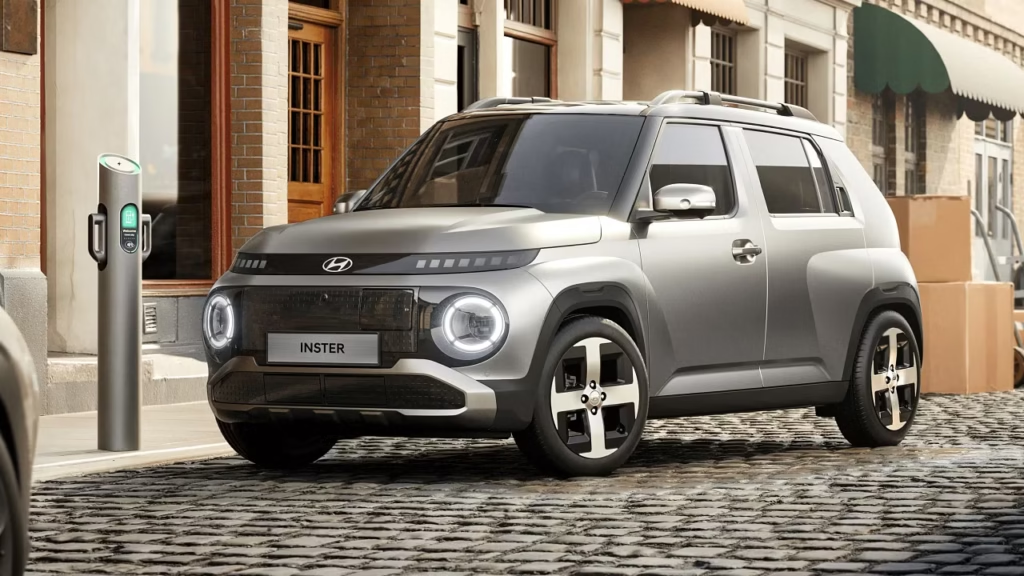
Launch Date: December 2026
Price Range: ₹15 Lakh – ₹18 Lakh
Battery Size: 42 kWh or 49 kWh
Real-World Range: 300-355 km
What Makes It Special:
This is tiny. It is smaller than the Venue. But inside? It is surprisingly spacious.
The front seats can fold completely flat. You can sleep in the car if you are on a road trip.
The center console moves. You can slide it forward or backward depending on where you want the cup holder.
Who Should Buy This:
People who live in crowded cities with narrow streets. This is easy to park.
14. VinFast Limo Green: The 7-Seater
Launch Date: March 2026
Price Range: ₹25 Lakh – ₹30 Lakh
Battery Size: 60 kWh
Real-World Range: 350-400 km
Seating: 7 people (3 rows)
What Makes It Special:
This is the only 7-seater electric car launching in 2026.
If you have a big family or run a taxi business, this is your only option. It has three rows of proper seats—not those tiny third-row seats that only kids can use.
Who Should Buy This:
Large families, fleet operators, Ola/Uber drivers who want to save on diesel.
Part 3: Luxury EVs (Above ₹30 Lakh)
For people who want the absolute best.
15. Skoda Enyaq iV: The Tank

Launch Date: December 2026
Price Range: ₹50 Lakh
Battery Size: 77 kWh
Real-World Range: 500 km
Motor Power: 286 horsepower
What Makes It Special:
This is a European SUV. It feels solid. When you close the door, it sounds like a bank vault closing.
Skoda is famous for “Simply Clever” features:
- There is an umbrella stored inside the door
- Ice scraper hidden in the fuel filler cap area
- 13-inch touchscreen with gesture controls (you wave your hand to control it)
Safety: 5-star Euro NCAP, 9 airbags
Who Should Buy This:
People who want German quality without paying BMW/Audi prices.
16. Hyundai Ioniq 6: The Porsche Killer

Launch Date: March 2026
Price Range: ₹65 Lakh
Battery Size: 77.4 kWh
Real-World Range: 550 km+
Official Range: 614 km (world record efficiency)
Motor Power: 225 horsepower
0-100 km/h: 7.4 seconds
What Makes It Special:
This car is shaped like a smooth pebble. The drag coefficient is just 0.21—it slices through the air like a knife.
It is the quietest car I have ever sat in. You cannot hear wind noise even at 120 km/h.
The steering wheel has “Pixel Lights”—little LEDs that change color based on the driving mode (blue for Eco, red for Sport).
Safety: 5-star Euro NCAP, Highway Driving Assist 2.0 (semi-autonomous)
Who Should Buy This:
People who want a car that looks like a ₹1 Crore Porsche but costs ₹65 Lakh.
17. Volvo EX90: The Safest Car Ever Made
Launch Date: September 2026
Price Range: ₹1.00 Crore+
Battery Size: 111 kWh
Real-World Range: 600 km
Seating: 7 people
What Makes It Special:
Volvo is obsessed with safety. This car has LIDAR on the roof—a laser radar system that can “see” in complete darkness up to 250 meters away.
The car watches you. If you look drowsy or distracted, it will vibrate the seat. If you still do not respond, it will pull over and stop the car safely.
There are 8 airbags. The structure is designed to absorb impacts from every angle.
Who Should Buy This:
Families with kids who want the absolute safest car money can buy.
Part 4: Electric Bikes & Scooters
This is where the market is exploding. Bikes are no longer just scooters—we now have proper motorcycles.
Electric Motorcycles
18. Royal Enfield Flying Flea C6: The Retro Icon

Launch Date: January–March 2026
Price Range: ₹2.50 Lakh
Motor Power: Equal to 125-150cc petrol bike
Weight: 110 kg (very light)
What Makes It Special:
This is Royal Enfield’s first electric bike. It looks like a World War II motorcycle—skinny tires, exposed frame, retro headlight.
The frame is made of forged aluminum. It is shaped like an exoskeleton (like a skeleton on the outside).
The display is a round TFT screen. It has Google Maps built in. You can switch between 5 riding modes (Eco, City, Sport, Custom, Rain).
Safety:
- Cornering ABS (brakes adjust automatically when you lean into a turn)
- Lean-angle traction control
- Cruise control
- Can charge from a regular 3-pin home plug
Who Should Buy This:
People who want to look cool riding to cafes or offices. This is not for highway trips.
19. Ultraviolette F99: The Speed Demon

Launch Date: November 2026
Price Range: ₹5.00 Lakh
Motor Power: 120 horsepower
Top Speed: 265 km/h (tested at NATRAX track)
0-100 km/h: 3 seconds
What Makes It Special:
This is India’s fastest bike. It is not for beginners.
The body is made of carbon fiber. The winglets on the side move electronically—they open at high speeds to keep the bike stable.
This is a track bike. You can take it racing.
Who Should Buy This:
Experienced riders who want a superbike without spending ₹20 Lakh on a Ducati.
20. Ola Roadster: The Budget Speed Bike

Launch Date: July 2026
Type: Naked sports bike
What Makes It Special:
Ola wants to replace petrol bikes like the Pulsar and Apache. This is a naked bike (no fairings) with aggressive styling.
Ola promises high performance at a budget price. Expect ₹1.5-2 Lakh pricing.
21. Oben Rorr EZ: The Safe Commuter
Launch Date: January 2026
Price Range: ₹1.50 Lakh
Battery Type: LFP (Lithium Iron Phosphate—safer in heat)
Battery Size: 4.4 kWh
Real Range: 175 km
Top Speed: 95 km/h
Motor Power: 10 kW
What Makes It Special:
The battery type matters. LFP batteries are much safer in Indian summer heat compared to old NCM batteries. They do not catch fire easily.
This is perfect for daily office commutes.
22. Tork Kratos X: The Street Fighter

Launch Date: February 2026
Motor Power: 9 kW (upgraded from 7.5 kW)
Range: 180 km
Top Speed: 105 km/h
What Makes It Special:
Tork upgraded the swingarm to aluminum. It is lighter and stiffer. The bike handles better in corners now.
Electric Scooters
23. Ather EL: The Activa Killer
Launch Date: October 2026
Price Range: Under ₹1.00 Lakh
Expected Range: 100 km
What Makes It Special:
Ather is famous for fast, sporty scooters (the 450 series). But they were small.
The “EL” is their family scooter. Big seat. Soft suspension. Made to compete with the Honda Activa.
It will look conventional (not futuristic like the 450).
24. Bajaj Chetak (Budget)
Launch Date: January 2026
Price Range: ₹85,000
Battery Size: 2.9 kWh
Range: 90 km
Motor Type: Hub motor (cheaper than mid-motor)
What Makes It Special:
This is a stripped-down Chetak. Bajaj removed expensive features to cut the price.
- Hub motor (instead of mid-motor)
- Basic LCD screen (no touchscreen)
- Handlebar-mounted indicators (instead of integrated)
But it still looks like a Chetak. And Bajaj’s service network is everywhere.
25. TVS iQube ST: The Range King
Launch Date: Already available (updated model)
Price Range: ₹1.20 Lakh – ₹1.50 Lakh
Battery Size: 5.1 kWh or 5.3 kWh
Real Range: 150-212 km (best in India)
Top Speed: 82 km/h
Charging Time: 5 hours (0-100%)
Storage: 32 liters under seat
What Makes It Special:
This has the longest range of any scooter in India. You can ride for 200+ km on a single charge.
The 7-inch touchscreen now shows social media notifications. You can see WhatsApp and Instagram alerts while riding.
Connected Features:
- Alexa voice commands
- Turn-by-turn navigation
- Ride analytics (shows your riding style)
- TPMS (tire pressure monitoring)
Warranty: 3 years/50,000 km (can extend to 5 years)
Service: Very low maintenance. First service at 4,000 km, then every 4,000 km.
EVs require far less maintenance than petrol vehicles, but there are still some key things to monitor. Check out our complete electric vehicle maintenance guide to keep your EV running smoothly for years.
26. Hero Vida VX2: The Swappable Battery Scooter
Launch Date: July 2026
Battery: Dual removable batteries
Range: 110 km (Go), 142 km (Plus)
Top Speed: 80 km/h
What Makes It Special:
The batteries come out. You can carry them upstairs to your flat and charge them.
Or you can swap them at Hero Energy stations (if available in your city).
Perfect for people who live in apartments without parking chargers.
27. River Indie: The SUV of Scooters
Launch Date: Already available (Gen 3)
Price Range: ₹1.46 Lakh
Battery Size: 4 kWh
Range: 163 km
Storage: 43 liters (highest in class)
Wheels: 14-inch (bigger than normal 12-inch)
What Makes It Special:
This has the most storage space of any scooter. You can fit:
- 1 full-face helmet
- 1 laptop bag
- 1 week of groceries
- And still have room left
The 14-inch wheels make it stable on highways.
Tech:
- Hill-hold assist (does not roll back on slopes)
- Cruise control
- 5-inch digital display
28. Suzuki e-Access
Launch Date: November 2026
Battery Size: 3 kWh
Range: 95 km
Top Speed: 71 km/h
What Makes It Special:
Suzuki’s first EV. It will be simple and reliable—just like the petrol Access.
Good resale value expected.
Tech:
- 4.2-inch TFT display (not touch)
- Turn-by-turn navigation via Bluetooth
- Keyless ignition
- Geo-fencing (get alerts if someone moves your scooter)
29. Honda Activa e: The Battery Swap King
Launch Date: Already launched (expanding to more cities)
Price Range: ₹1.17 Lakh – ₹1.52 Lakh
Battery: Dual removable “Mobile Power Pack e:”
Range: 102 km (dual battery)
Swap Network:
- Bengaluru: 150 stations (operational)
- Delhi: Rolling out (target 150 stations by March 2026)
- Mumbai: Rolling out (target 100 stations)
Subscription Plans:
- Standard: ₹1,699/month
- Lite: ₹678/month (60% cheaper, launched June 2025)
What Makes It Special:
You do not charge the scooter. You swap the batteries at Honda stations.
Each battery weighs 10 kg (manageable to carry).
Honda is partnering with HPCL petrol pumps, Metro stations, and dealerships for swap locations.
30. Simple Energy Family Scooter
Launch Date: Mid-2026
Type: Family scooter (bigger than Simple One)
What Makes It Special:
Simple Energy holds the record for longest range (Simple One does 212 km).
This new family model will trade some speed for comfort. Expect:
- Bigger seat
- Softer suspension
- Easier to get on/off (step-through design)
Quick Comparison: What Should You Buy?
| Your Need | Best Option | Why? |
|---|---|---|
| Cheapest car | VinFast VF 3 | Under ₹10L |
| Safest car | Maruti e Vitara | 5-star rating, 7 airbags |
| Longest range (car) | Kia EV3 Long Range | 600 km official |
| 7-seater | VinFast Limo Green | Only option |
| Style (bike) | Royal Enfield Flying Flea | Retro cool |
| Speed (bike) | Ultraviolette F99 | 265 km/h |
| Longest range (scooter) | TVS iQube ST 5.3 kWh | 212 km |
| Budget (scooter) | Bajaj Chetak Budget | ₹85,000 |
My Buying Advice
Wait until February 2026 if you can.
Why?
The Maruti e Vitara price will be announced on January 10. The Mahindra XEV 4e price comes on January 15.
Once these two launch, every other brand will panic. Expect price cuts and discounts from Tata, MG, and Hyundai to stay competitive.
Exception: If you need a scooter urgently, the TVS iQube ST is already available. Do not wait—just buy it.
Frequently Asked Questions
Which EV car has the best safety rating?
What is V2L?
Can I charge an EV at home?
Which electric scooter has the longest range?
Are battery-swap scooters worth it?
Final Thoughts
2026 is the year electric vehicles stop being “the future” and become “the present.”
Every price point now has real options. If you have been waiting to buy, this is your year.
I will keep updating this page as official prices are announced.
Safe driving!
About This Guide:
I spent 40+ hours researching this list. Every spec is verified from official sources: press releases, ARAI filings, and Bharat NCAP reports. If you spot an error, let me know in the report/comments.
