

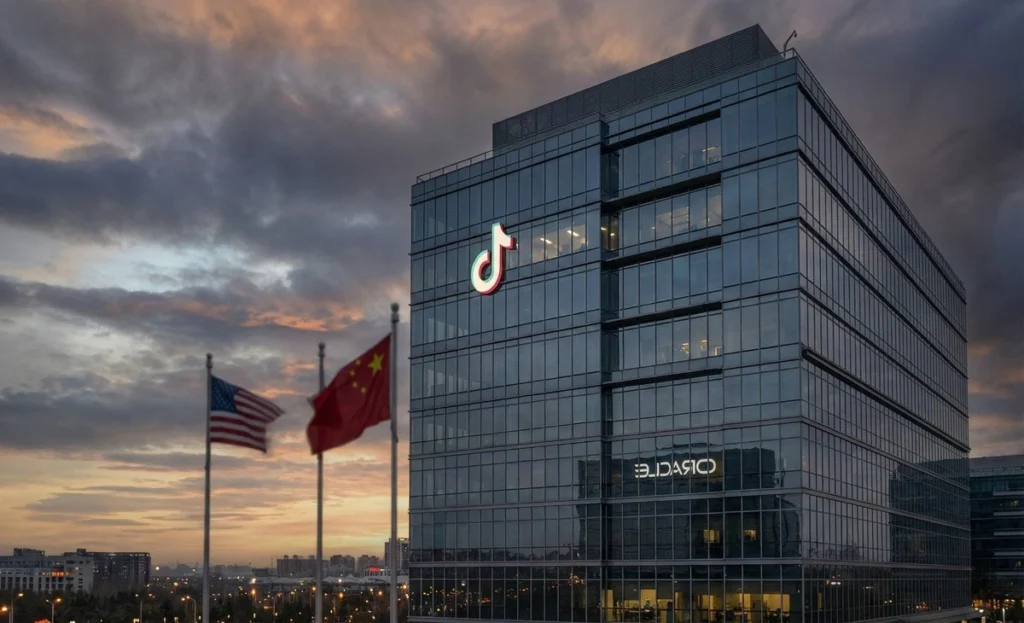

TikTok is trying a big new move to stay alive in the United States. The app’s Chinese owner ByteDance has signed binding papers to set up a new joint venture that will run TikTok’s U.S. operation and answer long, loud political fears in Washington.
The deal comes after years of talk about bans and forced sales of the app. More than 170 million people in the U.S. open TikTok every month, so the fight has always been about far more than just short videos.
Why Washington pushed TikTok to the edge
For a long time U.S. officials said TikTok’s China roots made it risky. They worried Chinese law could force ByteDance to share data from American users, or quietly tweak the feed to push certain stories and bury others.
A 2024 law told ByteDance to sell or face a ban in its biggest market, and the White House under first Joe Biden and now President Donald Trump kept extending deadlines while talks dragged on. The new joint venture is meant to answer that law without a full clean break from China.
What the new joint venture actually changes
The new company is called TikTok USDS Joint Venture LLC, and it will be the technical and security brain for the app in America. An internal memo from CEO Shou Zi Chew says the venture will be in charge of U.S. data protection, algorithm security, content moderation and software assurance.
The venture gets the “exclusive right and authority” to give formal promises that American content, code and data are being kept safe, with Oracle serving as a “trusted security partner” and hosting U.S. user information on its cloud inside the country. This structure is meant to build a stronger legal wall between U.S. user systems and ByteDance’s China‑based teams and infrastructure.
Who owns what under the TikTok US deal
Ownership is split in a way that tries to satisfy U.S. law but still keeps ByteDance in the picture. The Oracle‑Silver Lake‑MGX group, plus other global investors, will control about 80.1% of the new joint venture.
ByteDance keeps just under 20%, which is the maximum a Chinese company can hold under the divestment rules. The board will have seven members, with ByteDance naming one director and U.S. investors holding the rest of the seats.
TikTok’s U.S. entities that stay under ByteDance will still run big money makers like e‑commerce, advertising and marketing, and will manage interoperability of the global TikTok product outside the security ring. The joint venture, acting like a secure backend, will be paid a slice of revenue for providing its tech and data services.
Why the January 22 deadline matters
The deal is scheduled to close on January 22, which lines up with Trump’s latest extension of the divest‑or‑ban law. If regulators are satisfied the structure really shifts control of U.S. data and the algorithm, the long‑running ban threat is expected to fade.
Key lawmakers have already signaled they plan to call the new TikTok leadership to testify in 2026, which shows political pressure will not disappear overnight. Even with the joint venture, regulators can still lean on licensing, national security reviews and app‑store rules if they feel TikTok is crossing red lines.
What this means for creators, brands and rivals
For U.S. creators and marketers the headline is simple: the app is set to stay online. A ban would have nuked audiences overnight and forced a scramble to YouTube Shorts, Instagram Reels and Snapchat Spotlight.
Instead, the joint venture is designed to keep the feed running while tightening data and moderation governance. That means brand safety teams and agencies will watch how transparent Oracle and TikTok become around audits, storage locations and algorithm oversight over the next few quarters.
For rivals like Meta and Google, the move cuts off the biggest short‑term upside of a full TikTok shutdown. But it also sets a template: if regulators can force one Chinese‑linked app into this kind of security partnership, they can try the same pattern on other services in gaming, shopping and AI.
Big open questions for regulators and China
Two big questions still hang over the whole plan. First, experts say it is not clear whether TikTok’s main recommendation algorithm has been sold, licensed, or simply monitored by Oracle while ByteDance keeps ultimate control. That detail matters because whoever really controls the model can shape what millions of people see.
Second, Chinese officials are signaling that they still see TikTok as a sensitive asset. Beijing has repeated that its position on the app has not changed, and Chinese state media reports suggest ByteDance’s revenue‑sharing setup is closely watched at home.
Analysts in China say just keeping the U.S. operation alive counts as a win for ByteDance and could smooth the path to a future IPO and more AI projects. But they also warn that the U.S. can still use regulatory tools to push new demands on TikTok in the years ahead.
(Source: thehindu)
