

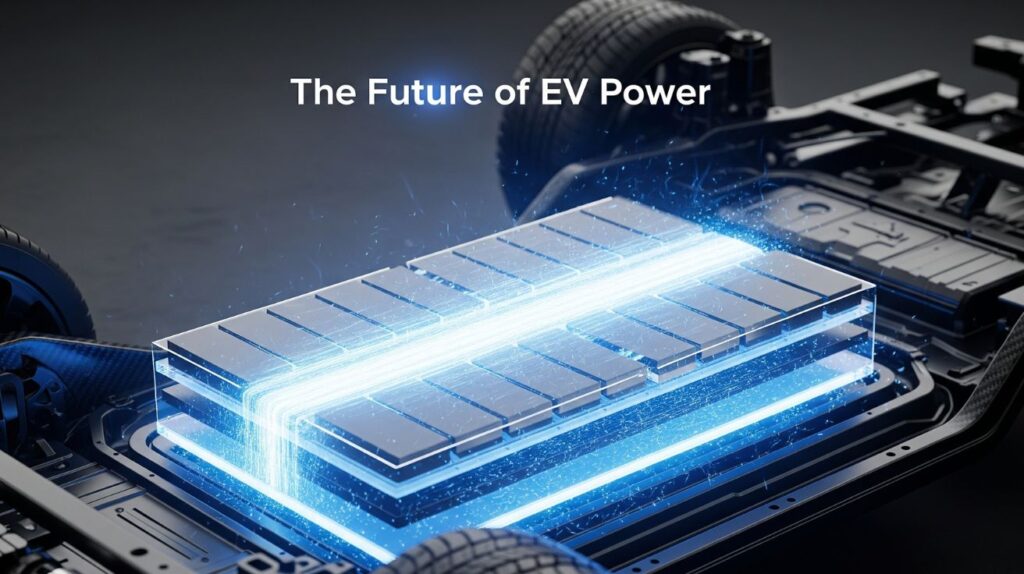

Electric vehicles are shaking up the automotive industry thanks to advances in battery technology. Instead of the liquid found in most batteries today, the solid-state EV battery uses a solid material to move energy. This represents a big step forward for EV car buyers and owners looking for better range and safety.
- Unlike conventional lithium-ion batteries that rely on liquid, solid-state batteries for electric vehicles promise more power in a smaller package.
- They could help EVs go farther on one charge, charge quicker, and stay safer on the road.
- For EV owners, this means less worry about running out of power during long trips.
- Battery tech matters a lot in EVs because it affects how far you can drive, how fast you charge, and even the car’s price.
- As more people switch to electric cars, solid-state batteries for cars could make them more practical for everyday use.
- They might even lower costs over time by lasting longer.
- EV car buyers often face choices between range, safety, and price.
- Solid-state EV batteries aim to solve these issues, offering a mix that could make electric driving the top choice for many.
- With companies pushing hard on this tech, the future looks bright for cleaner, greener rides.
What Is a Solid-State Battery?
A solid-state battery is a type of power source that uses solid materials to store and move energy, unlike the liquid-based ones in most EVs today. In a solid-state battery EV, the key part is the solid electrolyte that lets ions flow between the positive and negative sides.
These batteries are built with a cathode, an anode, and the solid electrolyte in between. Materials like ceramics or polymers make up the solid part, which helps hold more energy safely. For solid-state batteries for electric vehicles, this setup means better performance without the risks of leaks or fires.
Here’s a simple comparison table of solid-state vs. lithium-ion batteries:
| Feature | Solid-State Battery | Lithium-Ion Battery |
|---|---|---|
| Electrolyte Type | Solid (e.g., ceramic or polymer) | Liquid or gel |
| Energy Density | Up to 500 Wh/kg or more | 250-300 Wh/kg |
| Charging Time | As low as 10 minutes | 30-45 minutes |
| Safety | Lower fire risk, non-flammable | Higher risk of thermal runaway |
| Lifespan | Up to 10,000 cycles | 1,000-2,000 cycles |
Solid-state batteries work by moving ions through the solid material during charge and discharge. When charging, ions flow from the cathode to the anode, storing power. During use, they move back, releasing energy to power the EV.
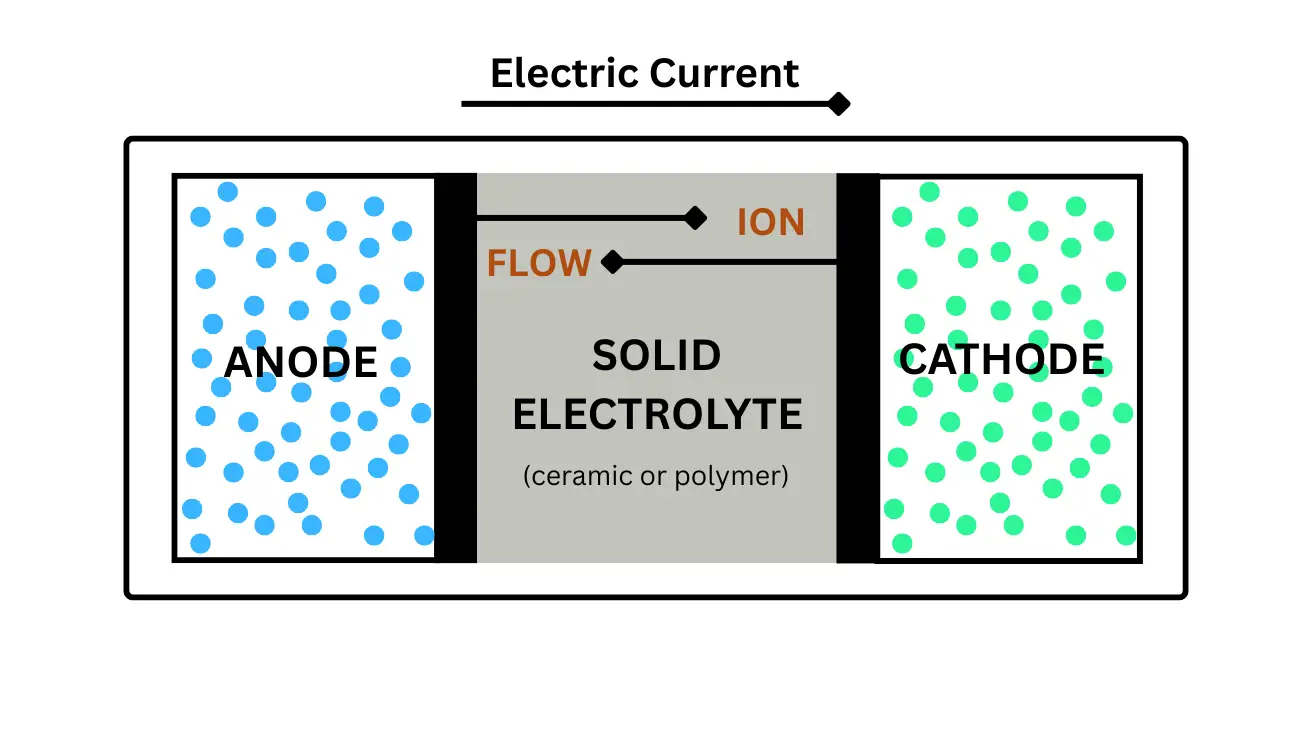
This mechanism makes solid-state batteries for cars more efficient, as the solid setup allows faster ion movement without the heat buildup of liquids.
Key Benefits of Solid-State EV Batteries
Solid-state EV batteries bring exciting perks for EV car owners and buyers. They charge much faster, often in under 10 minutes for a full boost, cutting wait times at stations.
Higher energy density is another big win. These batteries pack more power into less space, letting EVs travel up to 745 miles on one charge. For solid-state batteries for electric vehicles, this means saying goodbye to range worries.
They also last longer, with some designs handling 8,000 to 10,000 cycles before wearing out. This could mean batteries that outlive the car, saving money on replacements for EV owners.
Safety stands out too. Solid-state batteries are non-flammable, reducing fire risks from crashes or overheat. They’re a smarter choice for families and daily drivers.
- Faster charging: Up to 4 times quicker than lithium-ion.
- Higher energy density: 50-100% more than current batteries.
- Longer lifespan: Less degradation over time.
- Improved safety: No liquid to leak or ignite.
Challenges and Limitations
While promising, solid-state EV batteries face hurdles. Making them is tough, as solid materials need precise handling to avoid cracks or defects.
High costs are a barrier. Producing solid-state batteries for cars requires expensive materials and new factories, driving up prices for now.
Material issues persist, like how well parts fit together without breaking down over time. This can affect performance in cold weather or after many charges.
- Manufacturing difficulties: Scaling up production is complex and slow.
- High production cost: Currently more expensive than lithium-ion.
- Material compatibility issues: Interfaces between parts can degrade.
As of July 2025, these challenges are being tackled, but full fixes might take a few more years.
Solid-State Battery vs. Lithium-Ion Battery
Efficiency favors solid-state batteries, with less energy lost to heat. They handle high temperatures better, keeping performance steady in hot or cold conditions.
Cost per kWh is higher for solid-state now, but it could drop with mass production. Lithium-ion remains cheaper today, around $100/kWh, while solid-state aims for similar by 2027.
Temperature tolerance is stronger in solid-state, working well above 60°C where lithium-ion struggles. In real-world EV scenarios, this means reliable power in extreme weather.
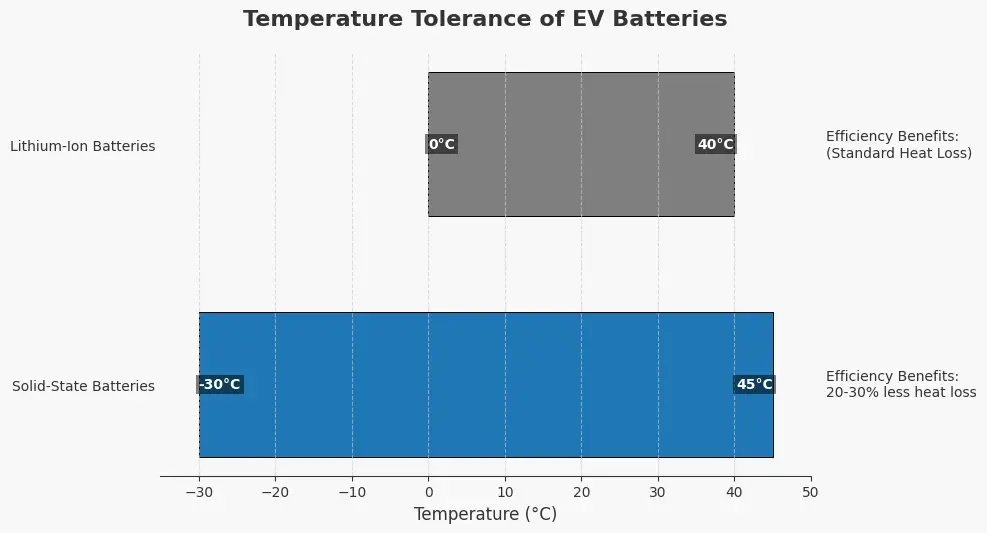
- Efficiency: Solid-state loses less energy, up to 20-30% less heat.
- Cost per kWh: The price of solid-state technology is currently higher but is decreasing.
- Temperature tolerance: Operates from -30°C to 45°C effectively.
- Performance in EVs: Better range and safety on highways or in cities.
Companies Leading Solid-State Battery Innovation
Toyota is a frontrunner, planning solid-state batteries for EVs by 2027 with up to a 745-mile range. They’re partnering with Idemitsu for mass production.
QuantumScape works with Volkswagen, aiming for production in 2027-2028, focusing on high-density cells.
Solid Power teams with BMW and Ford, testing 100 Ah cells for EVs by 2025.
Samsung SDI advances sulfide-based batteries, with pilot feedback showing promise for EV use.
Here’s a table of partnerships:
| Company | Key Partnerships | Focus Area |
|---|---|---|
| Toyota | Idemitsu, Panasonic | Mass production by 2027 |
| QuantumScape | Volkswagen | High-density EV cells |
| Solid Power | BMW, Ford | Prototype integration by 2025 |
| Samsung SDI | Various EV makers | Sulfide electrolytes |
These leaders are pushing solid-state batteries for electric vehicles forward.
When Will Solid-State Batteries Be Available?
Commercial rollout is expected around 2027 for many companies. Toyota targets 2027-2028 for EV models with solid-state tech.
EV models, including Toyota’s next-generation vehicles and Nissan’s upcoming models, are planned to feature solid-state technology by 2028. Hyundai aims for trials in 2025 and full production by 2030.

Automaker roadmaps show steady progress as of July 2025.
Impact on EV Market and Buyers
Solid-state tech boosts EV range to over 600 miles, improves safety with no fire risks, and could lower long-term costs. For solid-state batteries for cars, this means more appeal for buyers.
Resale value might rise, as longer-lasting batteries make used EVs more desirable. EV car owners could see batteries outlasting the vehicle.
Buyers should weigh waiting: Current EVs are good now, but solid-state could transform options by 2027.
- Range and safety: Up to 50% more miles, fewer accidents.
- Pricing: Initial high cost, but savings over time.
- Considerations: Balance current needs vs. future tech.
Real-World Use Cases and Pilot Programs
Major EV brands like Mercedes-Benz test solid-state in prototypes, showing better range in city driving. Toyota runs pilots for hybrid-solid-state mixes.
Government initiatives, like U.S. DOE grants to Solid Power, back research for scalable EVs.
Early feedback from tests highlights faster charging and stability, with QuantumScape’s cells passing safety checks.
- Current tests: BMW prototypes by 2025.
- Government-backed: EU and U.S. funding for EV adoption.
- Prototype feedback: Positive on durability and speed.
Solid-State Batteries and Sustainability
These batteries have a lower environmental impact, using fewer rare materials and lasting longer. They cut waste by needing fewer replacements.
Full recyclability is possible with solid designs, recycling up to 90% of materials.
Energy efficiency benefits include less power loss, making EVs greener overall.
- Lower impact: Reduced mining needs.
- Recyclability: High recovery rates.
- Efficiency: Up to 39% less carbon footprint.
Future Trends and Innovations
Next-gen materials like lithium-metal anodes and ceramic separators promise even higher density.
3D solid-state concepts could make batteries more compact for EVs.
Battery-as-a-service might emerge, letting owners swap or upgrade easily.
- Materials: Lithium-metal for better power.
- 3D concepts: Smaller, flexible designs.
- Service model: Easy updates for EV owners.
Frequently Asked Questions
Yes, they’re non-flammable and reduce fire risks compared to lithium-ion batteries, making them much safer for automotive use.
Currently, upgrading is not easy because it requires a redesign, but future battery swaps may become possible.
Solid-state batteries are currently more expensive, but they are expected to have comparable prices to traditional batteries by 2030.
Most likely, solid-state batteries will be available for purchase from Toyota or other manufacturers by 2027.
Solid-state EV batteries offer faster charging, longer range, and better safety, setting the stage for the next era of electric vehicles. Key takeaways include their high energy density and sustainability perks.
EV buyers and owners should expect big changes in the next 5 years, with models hitting roads by 2027.
Stay informed and consider long-term EV investments to ride this wave of innovation.
