

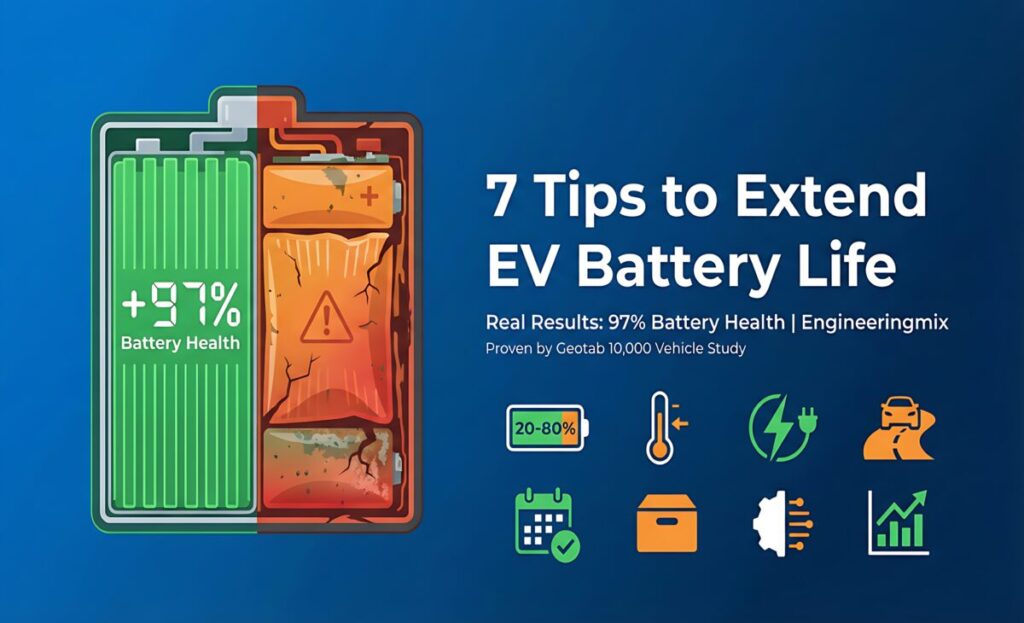

I bought my first electric car three years ago. The moment I drove it off the lot, one thought kept running through my head: what if the battery dies? That big battery pack under the car felt expensive and fragile. I spent money on the car, but I worried constantly about the battery.
I did what any nervous first-time EV owner would do. I researched. I read articles. I talked to other owners. I joined online forums and asked tons of questions. After months of research, I found something surprising. The worry was bigger than the actual problem.
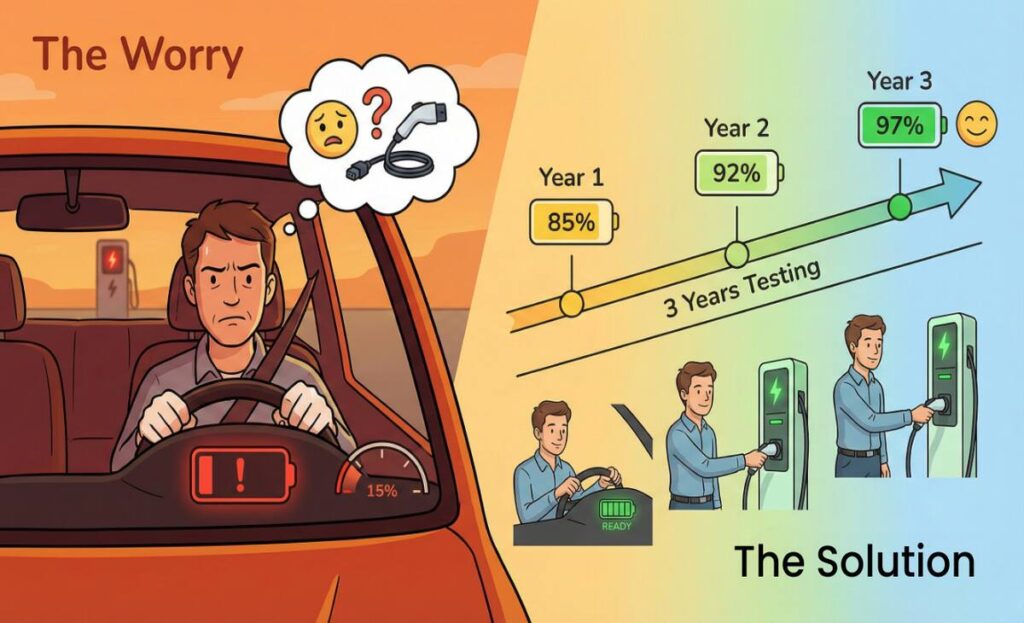
Today, my EV battery is still going strong. It’s at 97% health after three years. I’m here to share what actually works. Not the scary stuff you read online. Just real, practical tips that anyone can follow.
1: Why Your EV Battery Isn’t as Fragile as You Think
Let me start with the good news. Your EV battery is tougher than you believe.
I used to treat my battery like glass. Every charge felt stressful. Every hot day made me nervous. Then I looked at the real data, and everything changed.
The Numbers Tell a Better Story
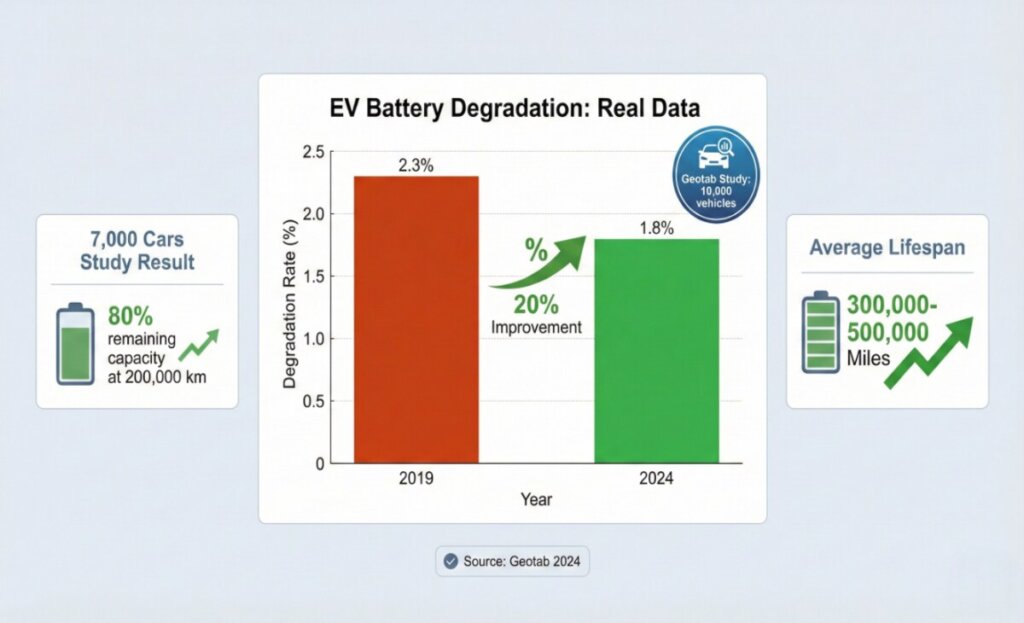
A study of 7,000 electric cars found that most batteries still had over 80% capacity after 200,000 kilometers. That’s the distance most cars travel in 15 years. Think about that for a moment. After 15 years, your battery still works like a car with four-fifths of its original tank.
According to a Geotab study of 10,000+ EVs, batteries degrade at just 1.8% annually, meaning most batteries will outlast the vehicle itself.
Modern EV batteries are degrading slower than ever. In 2019, batteries lost about 2.3% of capacity per year. Today? It’s down to 1.8% per year. That’s a 20% improvement in just five years.
Here’s something cool I learned. Real-world driving is actually gentler on batteries than lab tests. Scientists found that regular driving conditions extend battery life by up to 38% compared to controlled lab tests. All that stop-and-go city traffic? It’s actually good for your battery.
A peer-reviewed study published in Nature Energy (2025) analyzing 6,300 real-world EVs found that battery degradation in everyday conditions is actually slower than in controlled laboratory tests—by up to 38% in some cases.
What Battery Degradation Actually Means
When people say a battery is at 80% capacity, they don’t mean it’s broken. On a 250-mile range car, 80% means you get 200 miles of range. That’s enough for most people’s daily needs. For years.
The Warranty Tells You What Manufacturers Believe
Car companies put their money where their mouth is. Most EV warranties cover the battery for 8 years or 100,000 to 150,000 miles. Some go even higher.
Why would they guarantee the battery for 8 years if it might die in 5? They wouldn’t. Manufacturers test these batteries extensively. They know how long they really last.
Tesla batteries last 300,000 to 500,000 miles on average. The average American driver covers 13,476 miles per year. Do the math. That’s 22 to 37 years of battery life.
Modern battery longevity is the result of years of innovation in design and engineering. Advanced AI and digital twin technology are revolutionizing how manufacturers design and test batteries, ensuring they meet these high durability standards.
Your battery will probably outlast the car itself.
2: The 20-80% Charging Rule That Changed My Game
This single tip made the biggest difference in my battery’s health.
Keep your battery between 20% and 80% charge most of the time. I know it sounds simple, but it’s the most important thing you can do.
Why This Number Works
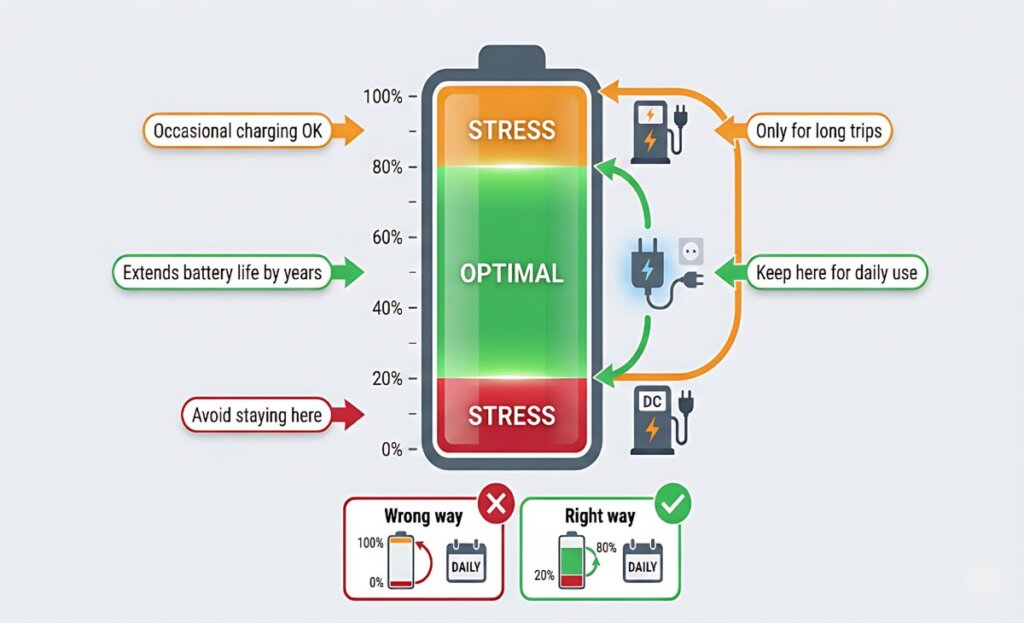
Charging to 100% creates stress inside the battery. The battery cells work overtime. Letting it drop below 20% puts extra strain on the system too. The 20-80% range is your battery’s comfort zone. It’s where it’s happiest.
I used to charge to 100% every single night. Mistake number one. Now I charge to 80% for my daily drives. I only go to 100% when I’m planning a long road trip.
Think of it like this. You wouldn’t keep your phone plugged in at 100% all the time. Same idea applies to your car battery.
My Real Charging Schedule
What I do:
- Plug in when I get home every evening
- Set my charge limit to 80% for weekdays
- Charge to 100% only before road trips
- Never let it sit below 20% for more than a few hours
- Unplug immediately after the charge is done
What I avoid:
- Charging to 100% overnight just because
- Letting it sit at 0% or 5% for long periods
- Charging to full “just in case” when I have nowhere to go
- Leaving it plugged in for days after it’s full
- Using cheap third-party chargers
Do’s and Don’ts Table
| Do These | Don’t Do These |
|---|---|
| Charge daily to 80% | Charge to 100% daily |
| Plug in every night | Let it sit below 20% |
| Use the manufacturer’s charger. | Use cheap aftermarket chargers |
| Charge in cool, dry places | Charge in extreme heat or cold |
| Unplug after charging | Leave it plugged for days |
When You Can Break the Rule
Road trips are the one exception. Going 300+ miles? Charge to 100%. Your car will handle it. Just don’t make this your everyday habit.
Charging to 100% occasionally isn’t bad. It’s the daily 100% charges that wear the battery down faster.
3: Temperature – Your Battery’s Silent Enemy
Temperature is the single biggest factor affecting your battery. Heat kills batteries faster than anything else. Cold hurts too, but the damage is usually temporary.
Heat Is Worse Than Cold
Extreme heat above 140°F (60°C) can permanently damage battery capacity. Your battery has to work overtime to cool itself down. Every second it spends too hot is damage that can’t be undone.
Cold below -22°F (-30°C) also hurts battery performance. But here’s the thing. Cold damage is usually temporary. When your battery warms up, performance comes back. Heat damage? That’s permanent.
The Ideal Temperature Range
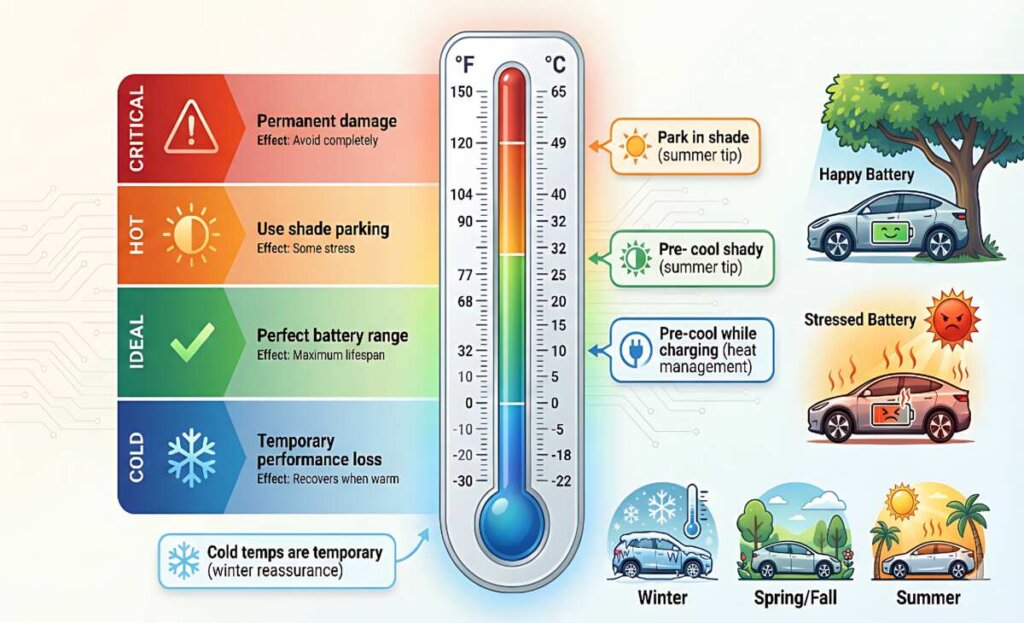
Your battery loves 68°F to 77°F (20°C to 25°C). That’s room temperature. That’s when everything works best.
This is why cars in Arizona degrade faster than cars in Seattle. The heat is relentless. But that doesn’t mean Arizona EV owners are stuck. You just need to be smarter about it.
My Temperature Strategy by Season
For Summer:
- Park in garage or shade whenever possible
- Pre-cool the cabin while plugged into a charger
- Never leave the car in direct sunlight for hours
- Use the car normally. The cooling system handles it.
For Winter:
- Pre-heat the cabin while charging (heat pump technology helps)
- Use seat heaters instead of blasting the cabin heater
- Park in a garage when possible
- Give the battery a few minutes to warm up before aggressive driving
General Rule:
Never leave your car parked in extreme temperatures for 24+ hours without power. Your car’s cooling system can only work when plugged in.
Help Your Battery Help You
Your EV has its own heating and cooling system. Think of it like a thermostat in your home. Your job is simple. Park smart. Keep it shaded in summer. Let it warm up before using hard drives in winter. That’s it.
The battery management system is doing most of the work. You just need to avoid the extremes.
4: Fast Charging—The Double-Edged Sword
DC fast charging is convenient. I use it sometimes on road trips. But it’s not for everyday use.
Fast charging creates heat. Lots of it. That heat puts extra stress on battery cells. It’s like running your engine at max power all the time. Occasionally? Fine. Every day? That’s a problem.
When Fast Charging Is Actually Okay
Good times to use it:
- Long road trips when you need 200+ miles
- Emergency situations
- When you’re genuinely in a hurry
Times to avoid it:
- Daily commuting (you have time at night)
- When Level 2 charging is available
- Just because it’s free at your office
- Multiple times per week
I limit fast charging to 2-3 times per month. The rest of the time? My home Level 2 charger. It’s gentler. It’s faster for the battery’s health.
What the Data Shows
A car that uses AC charging for 8 years retains 10% more battery capacity than a car using fast charging for the same time. That 10% adds years to your battery’s life.
Level 2 charging (7-11 kW home charger) is ideal for daily use. It’s gentle. It’s efficient. It gives your battery time to charge without stress.
5: Driving Habits That Actually Save Your Battery
How you drive affects battery life more than most people realize.
Gentle acceleration is your friend. You don’t need to race from every stoplight. Smooth, steady acceleration uses less energy and is easier on the battery.
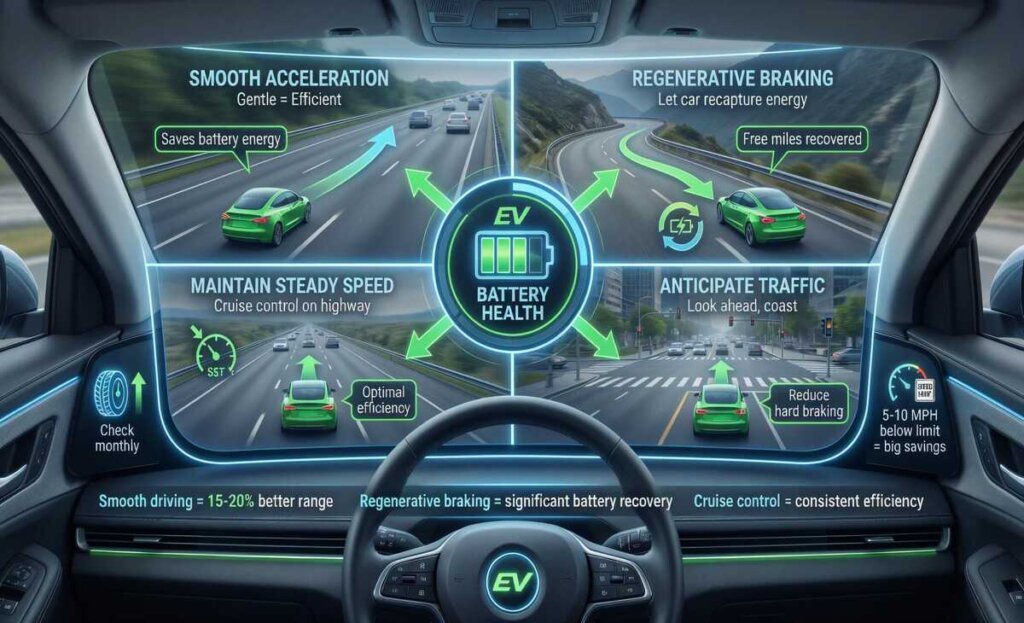
My Driving Formula
- Accelerate moderately. No need to drag race.
- Use regenerative braking. Let the car recapture energy instead of wasting it.
- Maintain steady speeds. Cruise control is your battery’s best friend.
- Anticipate traffic. Look ahead and coast instead of slamming brakes.
Speed Kills Range (And Battery Life)
Driving at 75 mph uses way more energy than 65 mph. I stick to 5-10 mph below highway speed limits. The time difference? Maybe 5 minutes on a 2-hour drive. The battery savings? Huge.
Tire pressure matters too. Properly inflated tires improve efficiency. Under-inflated tires make your battery work harder. Check pressure monthly.
Regenerative braking is one of the coolest features of an EV. Every time you let off the gas or brake gently, the car captures that energy and puts it back into the battery. It’s like getting free miles.
6: Storage Secrets for Long-Term Battery Health
Going on vacation? Leaving your EV parked for weeks? Here’s what to do.
Never store at 100% charge. The battery will slowly lose charge, and sitting at full capacity causes stress.
Never store at 0% either. The battery management system needs power to function.
Storage Guidelines
2-4 weeks away:
Leave your battery at 50-70% charge.
1-3 months away:
Leave at 50% charge. Check it monthly if possible.
3+ months away:
Leave at 50% charge. Ask someone to check it monthly.
Real-World Storage Lesson
I learned this the hard way. I left my car at 90% charge for three weeks while traveling. When I got back, the battery had degraded more in that month than in the previous six months. Never again.
The sweet spot is 50%. Not full, not empty. Right in the middle.
7: My Daily Routine for Battery Care
This is what actually works in real life. Simple stuff. Nothing complicated.
Morning
- Check charge level (usually 70-80% from overnight charging)
- Pre-condition cabin if needed while still plugged in
- Unplug and drive
Evening
- Plug in when arriving home
- Set charge limit to 80% for next day
- Let the car manage itself overnight
Monthly
- Check tire pressure (affects efficiency)
- Run battery health report if available (many apps offer this)
- Note any unusual range changes
Quarterly
- Full charge to 100% (then drive immediately)
- Check for software updates
- Inspect charging cable for damage
I don’t obsess over it. The battery management system does most of the work. I just follow the basics and let the technology do its job.
8: What the Real Data Shows
Let’s cut through the noise. Here’s what large-scale studies of thousands of cars actually found.
Battery Degradation Rates
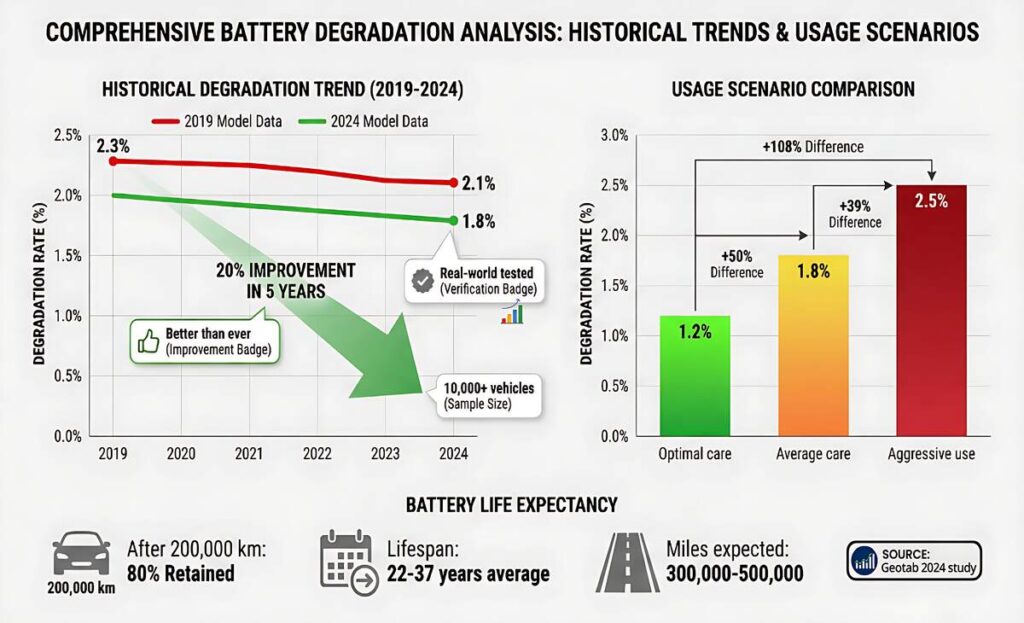
Recent data from 10,000+ EVs shows clear patterns:
- 2019 average: 2.3% capacity loss per year
- 2024 average: 1.8% capacity loss per year
- After 200,000 km: Most batteries retain 80%+ capacity
That’s roughly a 2% range loss per year. On a 250-mile range EV, you lose about 5 miles of range per year. After 10 years, you still have 200+ miles of range.
According to the Geotab 2024 battery degradation update, modern EV batteries degrade at just 1.8% annually—a significant 22% improvement from the 2.3% degradation rate measured in 2019.
Battery Life Expectancy
- Tesla Model Y/3: 300,000-500,000 miles expected
- Average driver lifespan: 22-37 years at current usage
- Warranty coverage: 8 years or 100,000-150,000 miles (most manufacturers)
The batteries will likely outlast the car chassis.
What “80% Capacity” Means in Real Life
It means your battery still works great. An 80% battery in a 250-mile car still drives 200 miles. That’s enough for most people’s daily needs. For years and years.
9: Debunking Common Battery Myths
Let me clear up confusion. These myths kept me stressed when I didn’t need to be.
Myth 1: You Must Fully Discharge Before Charging
This is old thinking from older battery types. Lithium-ion batteries prefer partial charges. In fact, frequent full discharge-recharge cycles damage modern batteries faster.
Myth 2: Charging Overnight Hurts the Battery
Modern EVs stop charging automatically. Once full, they just maintain that level. Leaving it plugged in overnight is completely fine.
Myth 3: Occasional Fast Charging Ruins Your Battery
Occasional fast charging is totally okay. It’s daily repeated use that adds stress. I fast charge 2-3 times per month without worry.
Myth 4: Batteries Die After 8 Years
The warranty is 8 years, but the battery lasts much longer. Most modern EV batteries outlast the vehicle itself.
Myth 5: You Need to Charge to 100% for Battery Calibration
This helps occasionally but isn’t required monthly. I do a full charge once per season. That’s plenty.
10: When to Worry About Your Battery
After all this, you might wonder: when is battery degradation actually a problem?
Normal Signs (Don’t Worry)
- Gradual range loss: around 2% per year.
- Slight winter range reduction (temporary)
- Varied range estimates based on how you’ve been driving
Warning Signs (Get It Checked)
- Sudden 10%+ range drop in days or weeks
- Battery error messages or warning lights
- Significantly different range from same-model cars
- Charging stops working or charges very slowly
If you notice warning signs, get a battery health check. Most dealerships can run diagnostics.
But honestly? Battery problems are rare. The data shows modern EV batteries are incredibly durable.
Should I charge my EV every day even if it’s half full?
Is it bad to charge to 100%?
How much does battery replacement cost?
Does fast charging ruin my battery?
What’s the best charging speed for daily use?
Should I worry about battery degradation?
Can I leave my EV plugged in overnight?
Do I need a home charger?
What if I don’t have a garage?
Is it okay to take a long road trip in an EV?
What temperature is best for charging?
What I Actually Do (Simple Version)
If you remember nothing else, remember this:
- Charge to 80% for daily use. Exception: charge to 100% before long trips.
- Park in shade. Heat is your battery’s enemy. Cold doesn’t hurt as much.
- Avoid daily fast charging. Use it when you need it. That’s it.
- Drive smoothly. No need to race from stoplights.
- Keep it plugged in overnight. Modern systems handle it fine.
- Store at 50% if you’ll be gone a long time. Full or empty charges are stressful for storage.
- Check your tire pressure monthly. Underinflated tires make the battery work harder.
That’s the whole list. Nothing complicated. Nothing expensive.
The Bottom Line
Your EV battery is tougher than you think. The key habits are simple:
- Keep charge between 20-80% daily
- Avoid extreme temperatures
- Limit fast charging to road trips
- Drive smoothly with regenerative braking
- Store at 50% for long periods
That’s it. No complex rituals. No constant monitoring. The battery management system handles the details. You just need to avoid the extremes.
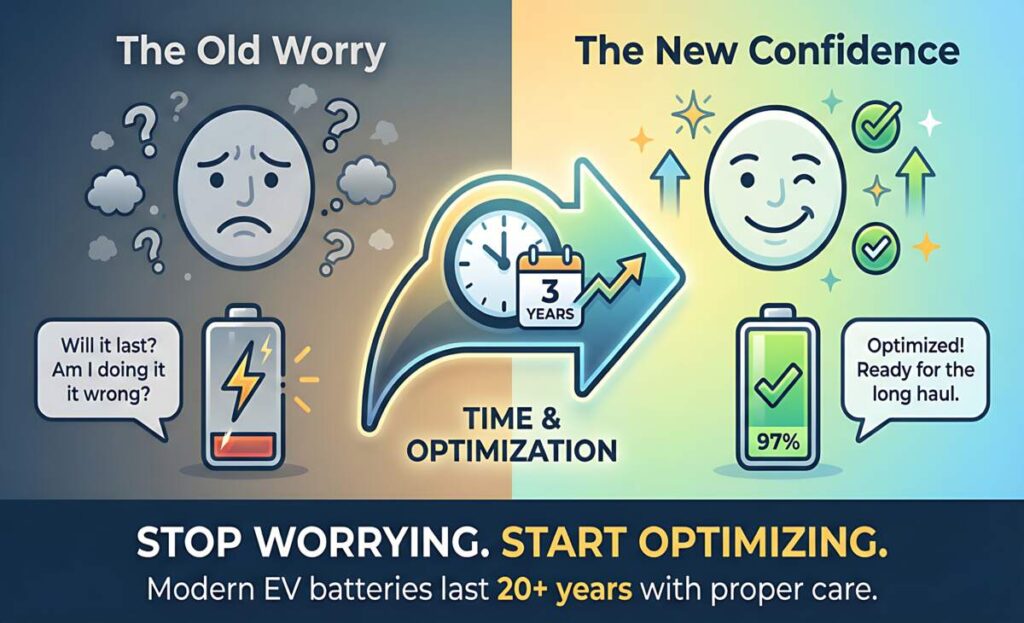
Three years into EV ownership, my battery shows 97% health. That’s normal. At this rate, it’ll last longer than I keep the car.
The science is clear. Modern EV batteries last. Treat them reasonably well, and they’ll treat you even better.
Stop worrying. Start driving. Your battery’s got this.
