

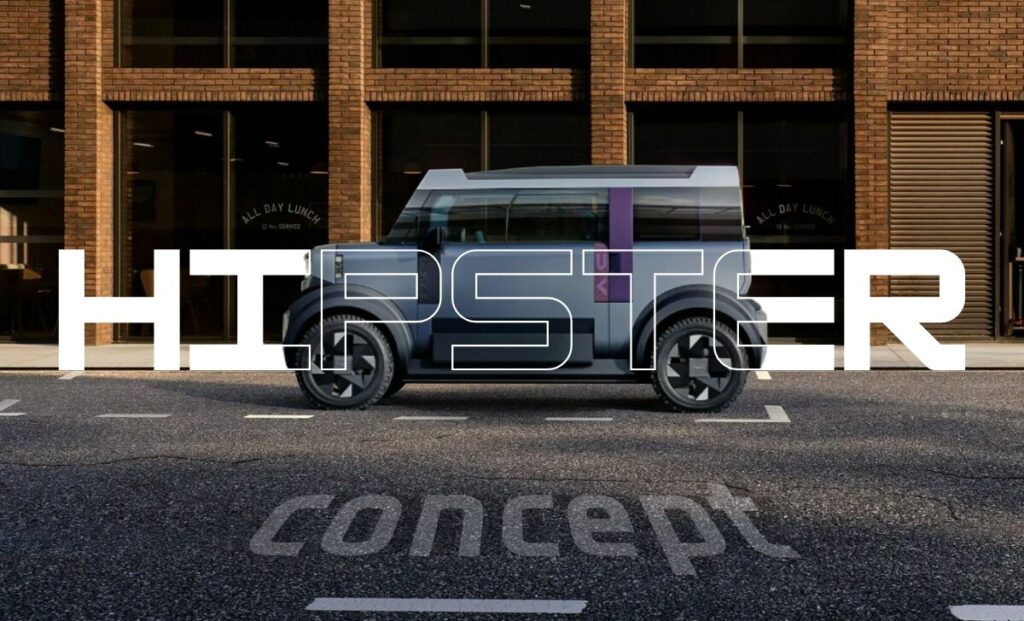

European car makers are fighting back. Dacia just dropped their newest weapon – a tiny electric vehicle that could change everything. The Hipster Concept isn’t just another prototype. It’s a direct challenge to China’s dominance in affordable EVs.
Europe’s Answer to Affordable Electric Mobility
Renault’s budget brand unveiled this mini marvel in Meudon, near Paris, on Monday . The timing couldn’t be better. Chinese EVs have been flooding European markets with rock-bottom prices. Now Dacia says they can play that game too.
The Hipster measures just 3 meters long and weighs under 800 kilograms. That’s significantly smaller than anything currently rolling on European roads. Even China’s Leapmotor T03 – the continent’s shortest EV – stretches 62 centimeters longer.
Stripped Down But Smart
Dacia didn’t just make the car smaller. They made it simpler. The Hipster comes with canvas seats instead of leather. Manual windows replace electric ones. Even the door handles got axed for fabric straps.
CEO Katrin Adt, who recently moved from Mercedes-Benz, describes it as “Dacia’s daring vision for accessible mobility” . The company believes most Europeans drive less than 40 kilometers daily at average speeds of 56 km/h. Perfect for the Hipster’s 150-kilometer range and 90 km/h top speed.
Key Specifications:
- Length: 3 meters (9.84 feet)
- Weight: Under 800 kg (1,764 pounds)
- Range: 150 kilometers
- Top Speed: 90 km/h (56 mph)
- Expected Price: Under €15,000 ($17,625)
The Japanese Inspiration Behind European Innovation
This isn’t just about making cheap cars. Dacia and Stellantis are pushing for something bigger – a new EU vehicle category inspired by Japan’s Kei Cars. These tiny vehicles get relaxed safety requirements in exchange for size and power limits.
David Durand, Dacia’s design director, told Reuters the regulations would likely require European production . That’s smart politics when Chinese competition heats up.
Market Reality Check
Car prices jumped 63% between 2001 and 2020 according to Dacia’s data. European buyers need affordable options. Chinese manufacturers spotted this gap first. Now European brands are scrambling to respond.
The Hipster prototype currently sports a single grey-blue color. Mass production depends on EU approval for the new small car category. Talks are ongoing, but nothing’s guaranteed.
Production Plans and Political Hurdles
Dacia says they’re “ready for mass production if opportunity arises”. But several pieces must fall into place first. The EU needs to approve the new vehicle category. Regulations will likely mandate European manufacturing. Dacia must develop the corresponding industrial model.
These aren’t small challenges. They represent a fundamental shift in how Europe approaches automotive regulation and competition.
Urban Mobility Revolution
The Hipster targets city dwellers and suburban commuters who don’t need highway cruising capabilities. Its 150-kilometer range covers most daily driving needs. The simplified design keeps maintenance costs down.
This approach mirrors successful strategies in other markets. Japan’s Kei Car category thrives because it matches vehicle capabilities to actual usage patterns. Europeans might embrace similar practicality.
Competition Response
Chinese EV manufacturers won’t stand still. They’ve invested heavily in European market penetration. Companies like BYD and NIO are establishing local operations. The price war is just beginning.
Dacia’s strategy focuses on European production and regulatory advantages. Whether this proves sufficient remains unclear. Chinese manufacturers have shown remarkable adaptability in global markets.
What This Means for Consumers
If approved, the Hipster could democratize electric vehicle ownership across Europe. Sub-€15,000 pricing puts EVs within reach for budget-conscious buyers. The simplified design philosophy might appeal to minimalist-minded consumers.
However, compromises are significant. Limited range restricts usage to local driving. Reduced features mean fewer conveniences. The single-color option eliminates personalization.
Looking Ahead
Dacia’s Hipster represents more than just another EV prototype. It’s a statement about European automotive strategy in an increasingly competitive global market. The success or failure of this approach could influence industry direction for years.
The prototype demonstrates that European manufacturers can think creatively about cost reduction. Whether regulators and consumers embrace this vision remains the critical question.
Mass production timelines depend entirely on regulatory approval. Dacia appears confident about technical readiness but acknowledges political uncertainty. The automotive landscape continues evolving rapidly, with affordability becoming the new battleground.
(Source: dacia)
