
OpenAI is now set to put ads inside ChatGPT, but only after drawing a bold red line around trust, privacy, and control for people who use the bot every day. The move aims to keep free and low-cost tiers running while high-end business products stay ad‑free.
ChatGPT Go and why ads show up now
OpenAI has been rolling out a cheaper plan called ChatGPT Go, a low-cost subscription that unlocks more tools without the full Pro price tag. Go is now live in 171 countries and is expanding across every market where ChatGPT already runs.
In the U.S. and other regions, Go sits between the free tier and premium plans like Pro, Business, and Enterprise. OpenAI says ads will appear only in the free and Go tiers, leaving the paid upper tiers clean from sponsored messages.
- Free users get more usage headroom by accepting ads.
- Go subscribers pay a small monthly fee and still see tests of sponsored slots.
- Pro, Business, and Enterprise tiers stay ad‑free as part of their value promise.
How ads will look inside ChatGPT
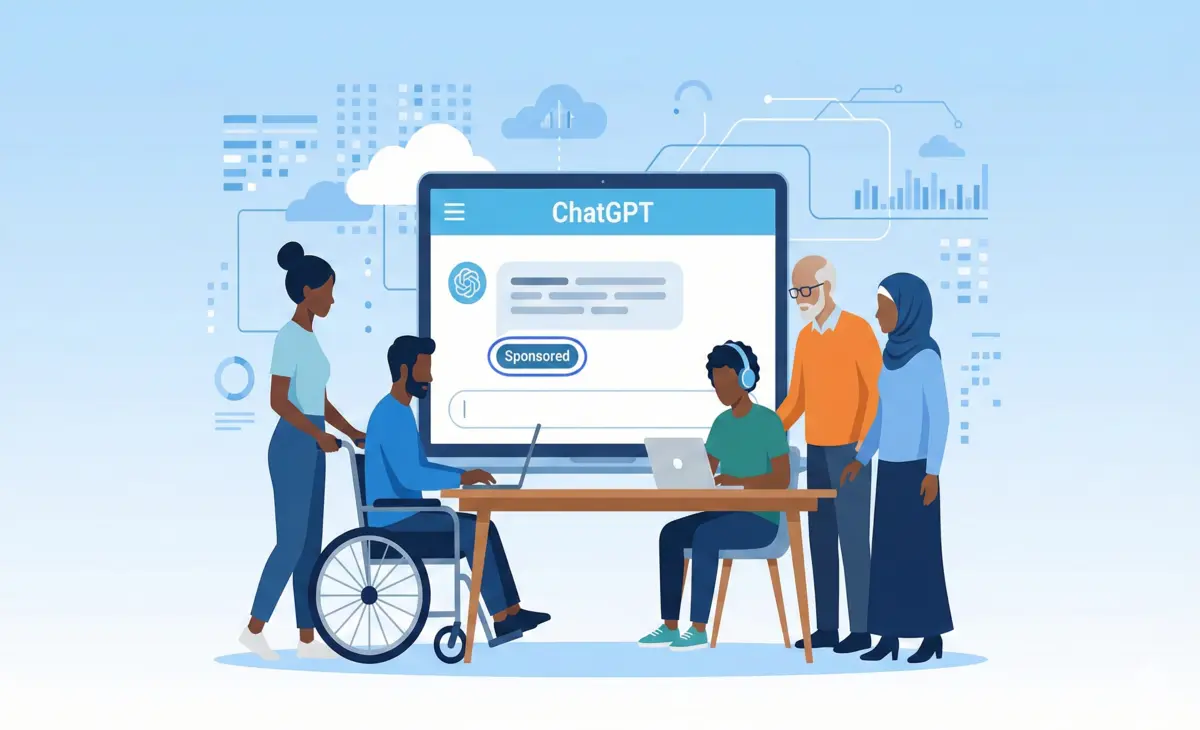
The first tests start in the U.S. in the coming weeks, targeting logged-in adults on the free and Go plans. Those tests place ads at the bottom of ChatGPT answers when a sponsored product or service matches the ongoing chat.
OpenAI says these placements will be clearly marked as “sponsored” and visually separated from the main answer. Users can tap or click to see why they got a specific ad, dismiss it, and send quick feedback.
- Ads appear at the end of an answer, not inside the generated text.
- Labels and layout aim to avoid blending ads into the reply.
- Feedback tools help OpenAI adjust what runs and where it runs.
Guardrails: who sees ads and when
OpenAI is drawing some early boundaries around where ads should never live. During the test phase, accounts that belong to users under 18 — or that OpenAI predicts as under 18 — won’t see ads at all.
The company also blocks ads from appearing near sensitive topics such as health, mental health, or politics. That rule is meant to avoid nudging people at vulnerable moments or around heavily regulated subjects.
- No ads for minors based on declared age and internal signals.
- No ad placements near health or political conversations.
- Adult users in the U.S. become the first test group.
OpenAI’s ad rulebook: mission, independence, privacy
To calm fears that ads might quietly steer answers, OpenAI has laid out a short list of ad principles. The company says the entire strategy has to stay aligned with its mission: making advanced AI broadly useful and available.
One central rule is answer independence. OpenAI stresses that ads do not influence what ChatGPT says and that responses should remain optimized only for usefulness, not for revenue.
Another key pillar is conversation privacy. OpenAI states it will not sell ChatGPT conversation data to advertisers and keeps chat logs private from ad buyers.
The company also points to user choice and control as a core requirement. People can switch off personalization and clear data used for ads at any time, and there will always be a paid option to remove ads completely.
Finally, OpenAI says it does not optimize for time spent inside ChatGPT. The focus is pitched as long-term trust and user value rather than squeezing more ad impressions per session.
What ad experiences could look like next
OpenAI hints that “static banner” style ads are only the first step. Because ChatGPT is conversational, the company imagines interactive ad flows where people can ask questions straight inside the sponsored experience.
One example shows a travel chat about Santa Fe, with a separate sponsored listing for a specific property that the user can explore in the same conversation. Another mock-up walks through dinner party recipes followed by a clearly marked hot sauce recommendation from a specific grocery brand.
- Ads could turn into mini chat assistants for brands.
- Users might compare products, ask follow-up questions, or check details inside the same thread.
- Small businesses gain new discovery channels without heavyweight creative teams.
Impact for small brands and the ad industry
Ads inside ChatGPT also sit at the crossroads of classic search ads and generative responses. For small companies and emerging brands, this format could work as a new way to surface in intent-rich conversations without building their own AI stack.
OpenAI argues that AI tools can level the playing field by letting anyone craft high-quality experiences instead of static banners. Over time, ad formats tuned to natural language queries may compete directly with traditional search placements on platforms like Google or social ads on Facebook and Instagram.
Business model: beyond subscriptions
Today, OpenAI already runs a strong enterprise and subscription business across Pro, Business, and Enterprise offerings. Ads are framed as just one more leg in a diversified revenue model that keeps intelligence within reach for more people.
By building the ad platform from scratch with explicit rules around trust, OpenAI hopes to avoid some of the pitfalls that hit earlier web and social ad systems. The company says feedback during the first months of testing will directly shape how, when, and where ads appear in the product.
Final opinion
OpenAI stepping into ads puts ChatGPT on a path that looks a lot closer to how Google and Meta built their business engines. For teams already building on the platform, this shift means the “free” and “Go” layers now work more like ad‑supported search, while the top tiers stay clean for production workloads.
If the guardrails hold, ads could fund broader reach without breaking core trust, but the real test will arrive when sponsored links sit next to high‑stakes queries and users begin to push on the boundaries. For a product already central to how many people research and build, the pressure to keep answers independent from ad money will only grow.
(Source: openai)

Leave a Reply