

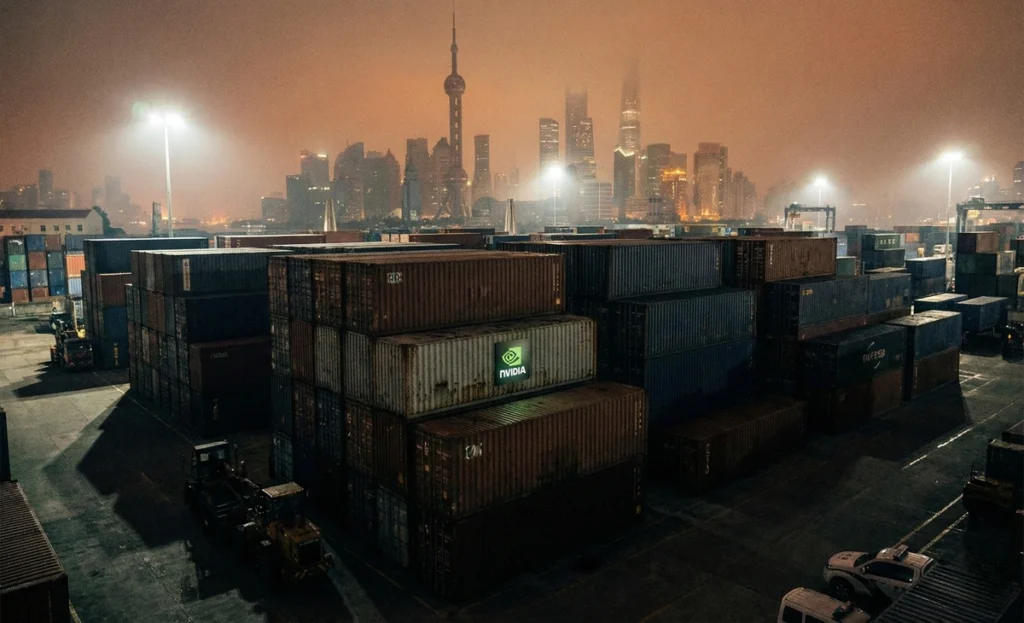

Nvidia now wants every Chinese customer to hand over all the money for H200 AI chips before delivery, and it will not let them cancel, tweak, or get refunds once an order is locked in. This strict rule is rare even in a hot hardware market and shows how much risk the company sees in selling high‑end GPUs into China right now.
What exactly Nvidia changed
Reports from Reuters and other outlets say Nvidia moved from taking deposits to demanding full prepayment for H200 orders. In some special cases, clients can use commercial insurance or assets as collateral instead of pure cash, but the company still treats the orders as binding once accepted.
Key points on the new terms:
- Full bill upfront for every H200 order from Chinese buyers.
- No cancellations, no refunds, and no configuration changes after purchase.
- Limited option to use insurance or asset collateral in place of cash for select customers.
- Policy is much tighter than earlier deals that sometimes allowed partial deposits.
These terms push almost all commercial and regulatory risk onto Chinese cloud, internet, and AI firms that want to keep building large GPU clusters around Nvidia’s platform.
Why Nvidia is pulling this risk‑hedge move
The rule change is happening after months of shifting export and import decisions on advanced AI hardware between Washington and Beijing. Nvidia was hit badly when U.S. officials suddenly forced licenses or bans on some China‑bound chips, including a previous H‑series product, leading to a multibillion‑dollar inventory write‑down.
Drivers behind the H200 prepayment push:
- Uncertainty over whether Chinese regulators will clear each batch of H200 shipments or tighten rules again.
- Fear of being stuck with large unsold China‑specific stock if policy flips, as happened with the H20.
- Strong, time‑sensitive demand from Chinese firms that want to secure supply even under harsh terms.
By forcing cash up front, Nvidia tries to shield its balance sheet from sudden regulatory shocks while still riding the wave of AI spending in the world’s second‑largest economy.
Beijing tells firms to pause, but demand stays hot
At nearly the same time, Chinese authorities have reportedly asked some domestic tech firms to pause new H200 orders while they review how these chips should be allowed into the country and how much local silicon buyers must also use. The pause is meant to stop a pre-decision buying rush and reinforce China’s push toward homegrown AI processors.
Still, Chinese internet and cloud platforms have already placed orders for hundreds of thousands, even millions, of H200 units for delivery into 2026. Some server makers have reportedly agreed to non‑refundable, non‑modifiable orders that line up with Nvidia’s tough new rules, showing just how badly they want these GPUs despite the political fog.
What this means for AI builders in China
For Chinese AI players, the H200 policy is both a painful cost and a strategic signal.
- Capital risk: Firms must lock up large upfront cash for chips they may not be fully sure they can clear through customs or deploy freely.
- Planning risk: No change or refund options make capacity planning harder, especially if China later forces higher usage of domestic accelerators.
- Ecosystem pressure: The tougher Nvidia terms give Beijing more room to promote local GPU vendors that may offer more flexible payment and supply conditions.
Yet for many cloud and model‑training companies, the performance and ecosystem advantages around Nvidia’s stack still outweigh these new financial and regulatory headaches in the short term.
How global AI and chip markets may react
Outside China, the episode underlines how AI chip markets are now tightly bound to state‑level decisions, not just pure tech specs or price. Investors, data‑center operators, and model builders will watch three things closely over the next quarter.
- Whether China issues clear, stable rules that allow some H200 imports with conditions rather than sudden bans.
- How much Nvidia continues to lean on prepayment and non‑refundable contracts in other politically sensitive regions.
- Whether Chinese buyers accelerate work with domestic GPU firms as a hedge against both U.S. and Nvidia policy shifts.
If Beijing and Washington keep toggling rules while companies like Nvidia tighten commercial terms, AI builders everywhere may treat supply‑chain and policy analysis as seriously as model architectures and training data.
