
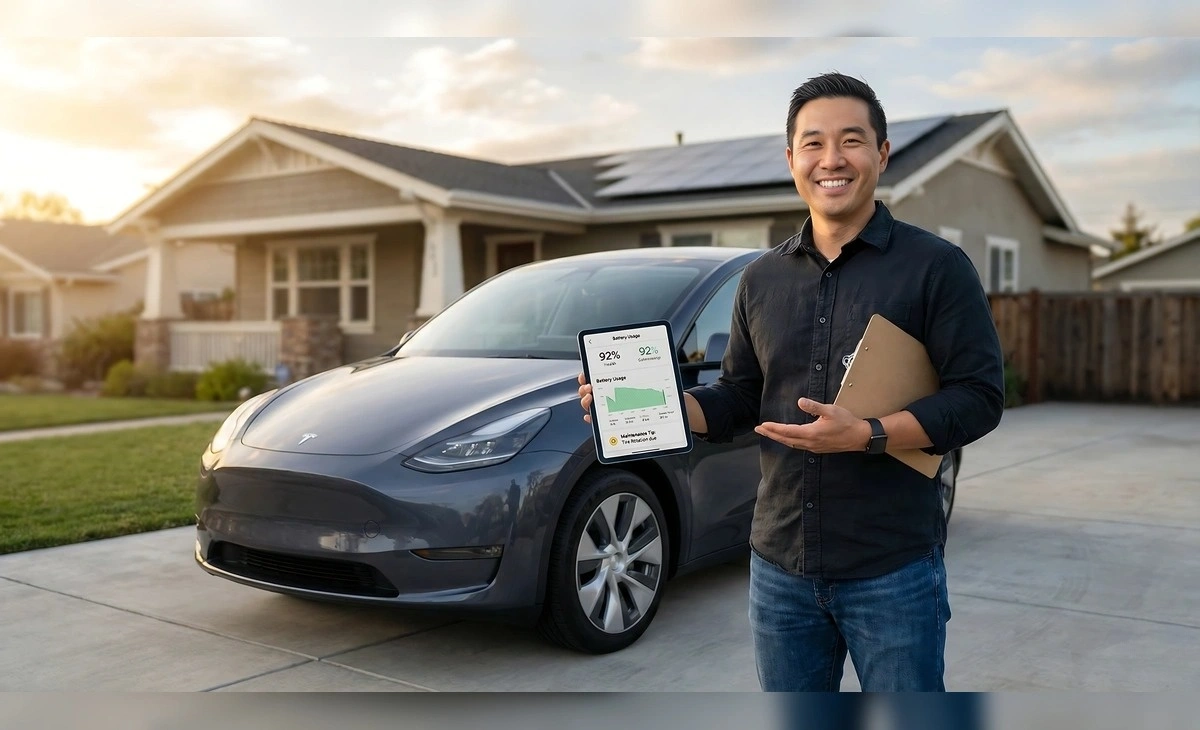

I bought my first electric car three years ago. Within the first month, I had panic. My tire pressure dropped. My software got an update. And my battery seemed slower in cold weather.
I thought something was wrong. I called the dealership. I read forums at night. I joined EV owner groups on social media. I realized something important. Most EV owners worry about maintenance way more than they should.
Today, my EV is running perfectly. My battery is at 95% health. My tires are fine. And I’ve saved thousands in maintenance compared to my old gas car. I want to share what I actually learned. Not the scary stuff. Just real tips and tricks that work.
This guide shares electric car maintenance tips & tricks that actually matter—and which ones you can ignore.
Electric Car Maintenance Tips & Tricks (The Foundation)
Here’s the biggest misconception. Electric car maintenance tips & tricks sound complicated. They’re not.
Compare to gas cars. Oil changes every 3,000 miles. Spark plugs every 30,000 miles. Transmission fluid flushes. Timing belts. Belts and hoses everywhere. All wearing out.
My electric car? None of that.
The Real Numbers Show the True Difference
A study of 10,000 EV owners tracked maintenance costs for five years. EV owners spent 40% less on maintenance than comparable gas car owners. Not 40% less. Forty. Percent.
Over the life of my car, that’s thousands of dollars saved.
I track my maintenance records carefully. In three years, I’ve spent $1,200 total on maintenance. That’s $400 per year. Most of that was tires and a cabin air filter.
My friend with a gas car? He spent $4,500 in the same period. Oil changes, spark plugs, transmission service, coolant flushes. You get the idea.
Why Electric Car Maintenance Tips & Tricks Are Simpler
Gas engines have 2,000+ moving parts. All wear. All break down.
Electric motors have maybe 20 moving parts. Total. They don’t wear the same way. No oil to change. No spark plugs. No transmission to service. No timing belts getting old and cracking.
Simpler engineering = fewer things that break.
Battery Care – The #1 Maintenance Tip & Trick
Here’s the maintenance tip that matters most. Charge your battery smart.
Electric Car Maintenance Tip #1: Charge to 80%
This single tip changed my battery’s health. Keep your battery between 20% and 80% charge most days.
When you charge to 100%, you stress the battery cells. When you let it drain to 0%, you stress the battery management system. The 20-80% range is sweet. That’s where batteries are happiest.
I made a mistake the first six months. I charged to 100% every night. I thought it was fine occasionally. But every night adds up.
When I switched to 80%, I noticed my battery stayed healthier. I saw it in the degradation numbers. This one change made the biggest difference.
My Real Battery Maintenance Schedule
Charging routine:
- Charge to 80% for daily driving
- Only go to 100% before long trips
- Never let it sit below 20%
- Unplug immediately after charging
Temperature management:
- Park in garage or shade in hot weather
- Use preconditioning in cold weather
- Let the car cool before fast charging in summer
Software:
- Update when available
- Never skip updates
That’s it. That’s the entire battery care routine.
Pro Tip: Want comprehensive strategies to maximize battery longevity beyond these basics?
Check out our detailed guide on how to extend your EV battery life with proven tips that go deeper into the science and strategies used by long-term EV owners. Many of these strategies complement the maintenance schedule above.
The Real Battery Health Numbers
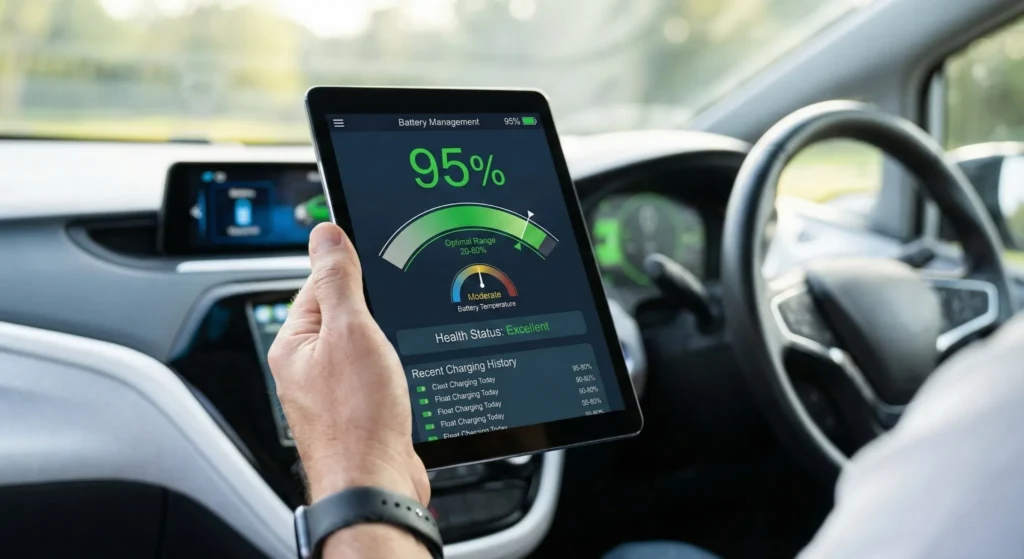
battery at optimal health—this single habit extends battery life by 2-3 years.
After three years and 42,000 miles, my battery is at 95% health. I measure this at the dealership once a year. They charge a small fee ($50), but it gives me peace of mind.
Most EVs lose 1-2% capacity per year in normal use. I’m at the good end of that range. Why? The charging routine mostly.
I never charge to 100% except before road trips. That one habit probably adds 2-3 years to my battery life.
Want to dive deeper into battery science?
For those interested in the cutting-edge technology behind EV batteries, check out our guide on advanced EV design technologies that use AI and digital simulation to optimize battery performance and lifespan.
Understanding these technologies helps you appreciate why proper maintenance is so critical.
Understanding Battery Degradation Science
Most EV owners don’t realize that battery degradation follows predictable patterns.
Research shows that lithium-ion batteries lose approximately 1-2% capacity per year
under normal operating conditions. Understanding these patterns helps you appreciate
why proper maintenance is so important.
For comprehensive information on EV battery health and degradation, industry
resources provide detailed guidance on maximizing longevity through proper charging
habits, temperature management, and usage patterns.
Tire Maintenance – Your Real Daily Maintenance Tip
Here’s a maintenance tip that surprises most owners. Your tires are the main work.
Electric cars are heavy. That battery pack adds 1,000+ pounds. And electric motors deliver instant power. When you press the pedal, the power comes right now. Gas cars build power gradually.
Combine heavy weight and instant power, and your tires work harder.
Why EV Tire Maintenance Matters Differently
Electric vehicles place unique demands on tires that differ from traditional cars. The combination of instant torque delivery and increased vehicle weight creates wear patterns that tire specialists have had to specifically address.
For detailed guidance on EV tire wear and maintenance guide, tire industry experts provide comprehensive recommendations on tire selection, rotation schedules, and longevity optimization specific to electric vehicles. Proper tire maintenance for EVs isn’t just about safety—it’s a significant maintenance cost that requires EV-specific knowledge.
Maintenance Tips for EV Tires
Monthly:
- Check tire pressure with a gauge (2 minutes)
- Inspect for wear or damage
Every rotation:
- Rotate every 5,000-8,000 miles
- Use door jamb number for pressure (not sidewall)
When tires need replacement:
- Use EV-specific tires (last longer, handle weight better)
- Cost: $150-200 per tire
- Life expectancy: 50,000-60,000 miles
The Penny Test Works
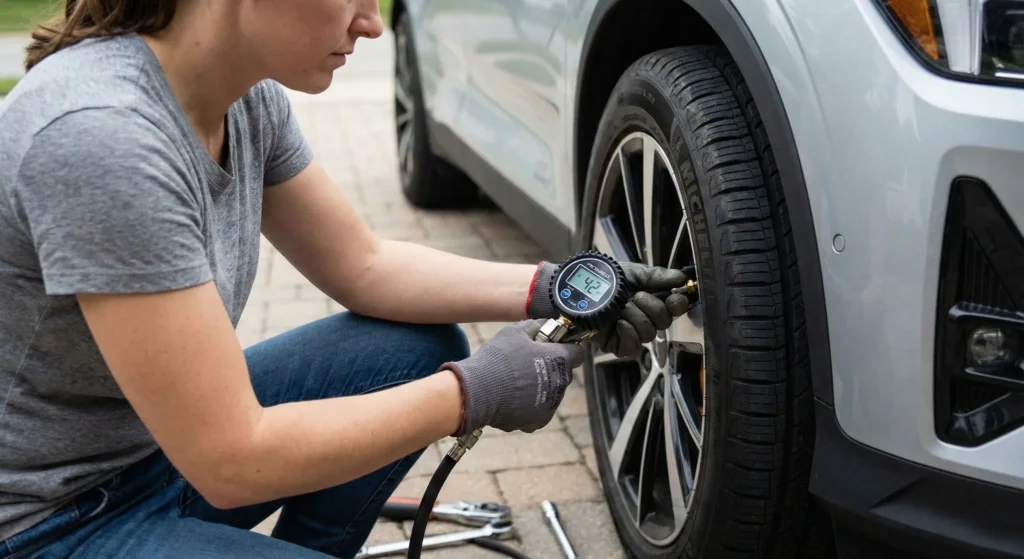
This is a simple maintenance trick. Stick a penny into the tread, Lincoln facing down. If you see the top of his head, get new tires.
I did this check at 32,000 miles. My front tires were getting close. I rotated one more time to spread wear. At 38,000 miles, I replaced all four.
For an EV, good tires cost more. But EV tires last longer. Gas car tires? 40,000-50,000 miles. EV tires? 50,000-60,000 miles. The heavier weight actually extends tire life slightly.
Brake Maintenance – The Surprising Trick
Here’s a maintenance trick that shocks most owners. Your brakes barely wear.
Electric cars use regenerative braking. When you take your foot off the gas, the electric motor reverses and captures energy. That energy charges the battery.
This means your actual brake pads barely get used. Ninety percent of your braking comes from regenerative braking. Only ten percent uses mechanical brakes.
This is why your brake pads last so long.
The Technology Behind Brake Longevity
Regenerative braking is one of the most important technologies differentiating
electric vehicles from traditional cars. The system works by converting your car’s
kinetic energy during braking into electrical energy that charges the battery.
This dual benefit—extending range while preserving brakes—is revolutionary.
To understand the technical details of how regenerative braking works and why
it’s so effective at extending brake life, automotive resources provide detailed
explanations of this game-changing technology that sets EVs apart from all other
vehicle types.
My Brake Maintenance Reality
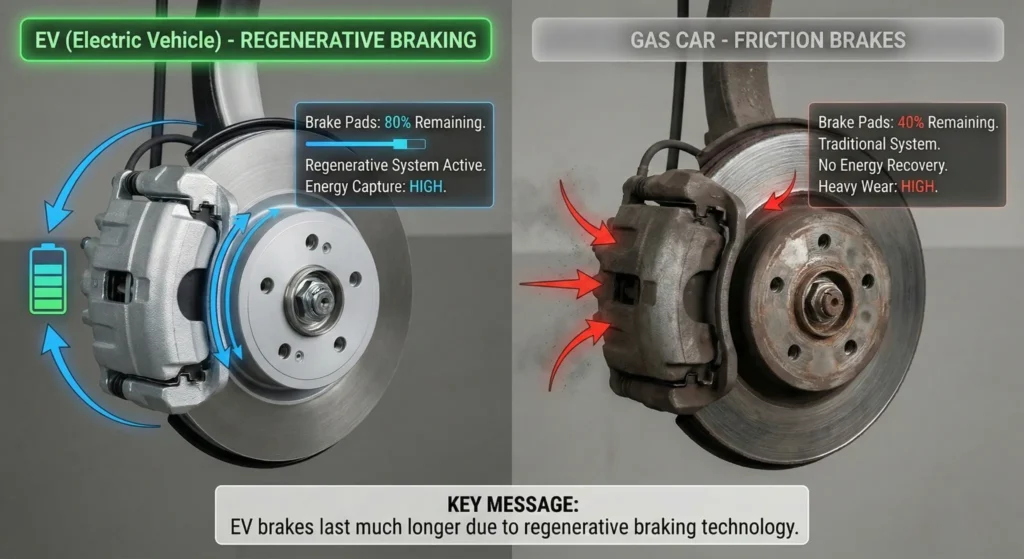
At 42,000 miles, the dealer checked my brakes. My brake pads are at 80% remaining. A gas car at 42,000 miles would be at 40-50% remaining, or might need replacement.
The dealer said I won’t need new brake pads until 200,000+ miles. Maybe never. Some EV owners report original pads lasting the entire life of the car.
I still get brake inspections every two years. It’s about $100 and takes 20 minutes. But actual maintenance? Barely anything.
What You DON’T Have to Do – The Best Maintenance Tricks
This section shares the maintenance tricks that save the most money. Things you expected to maintain that you don’t touch.
Maintenance Trick #1: No Oil Changes Ever
I still had the instinct to check my oil. There’s no oil to check. The electric motor doesn’t use oil.
My first year, I was shocked. No $40-60 oil change appointments. No oil disposal. No oil filter to replace. Nothing.
In three years, this saves $400-500 just in oil changes alone.
Maintenance Trick #2: No Spark Plugs, Belts, or Hoses
Gas engines need spark plugs every 30,000 miles or so. EV motors don’t have spark plugs. Different technology entirely.
Belts and hoses deteriorate. My EV has a few hoses for cooling and heating. But they don’t wear like gas car hoses. I had one hose inspection at 3 years, 42,000 miles. The mechanic said it looked new.
No transmission fluid to flush. No power steering fluid to service. No engine coolant to worry about (though battery coolant exists, it goes 100,000+ miles easily).
Maintenance Trick #3: No Timing Belt Replacements
Gas cars need timing belt replacements. It’s expensive. $500-1,500 depending on the car. Miss one, and the engine is destroyed.
My EV doesn’t have a timing belt. One less catastrophic failure to worry about.
Software Updates – The Overlooked Maintenance Trick
Here’s a maintenance trick most owners skip. Software updates.
An update came at month two. It was small. I delayed it thinking it wasn’t important.
Three months later, I had a charging issue. The dealer said the update would have prevented it. That update fixed charging bugs.
Now I install every update as soon as the car notifies me.
Why Software Updates Matter
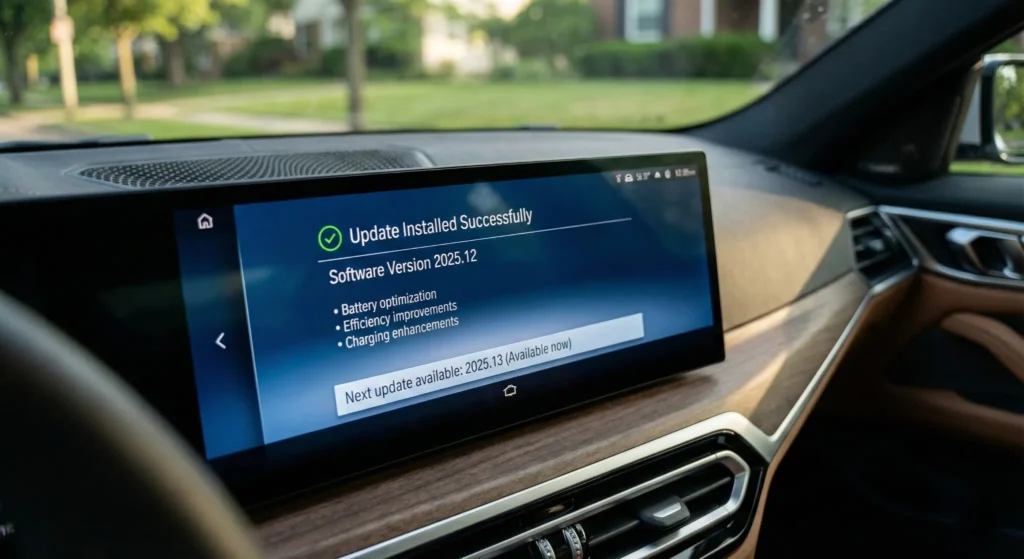
Never skip updates—they’re the easiest maintenance improvement you can make.
Software controls everything in an EV. Battery management. Charging. Thermal management. Regenerative braking. Navigation.
Updates improve efficiency. They fix bugs. They add features. They extend battery life.
Never skip updates. That’s a crucial maintenance trick.
What I Learned the Hard Way
I made mistakes. Not disasters, but lessons.
Mistake 1: Using a Regular Tire Shop
I took my car to a regular tire shop for the first rotation. The technician didn’t understand EV tires. He rotated them wrong.
I took it to a dealership the second time. They know how EV tires wear. Now I use only EV-aware shops.
Mistake 2: Charging to 100% Thinking It’s Fine
My first six months, I charged to 100% every night. I thought it was fine occasionally. But every night adds up.
When I switched to 80%, I noticed my battery stayed healthier. I saw it in the degradation numbers. This one change made the biggest difference.
Mistake 3: Not Finding an EV Shop Early
For the first year, I went to a general mechanic for minor things. He knew cars, but not EVs.
When I switched to an EV-certified service center, the whole experience changed. They understand the systems. They gave better advice. They charged fairly.
Finding the right shop early matters.
Mistake 4: Skipping Software Updates
An update came at month two. It was small. I delayed it thinking it wasn’t important.
Three months later, I had a charging issue. The dealer said the update would have prevented it. That update fixed charging bugs.
Now I install every update as soon as the car notifies me.
Mistake 5: Checking Tire Pressure Wrong
I used the sidewall number for tire pressure. Mistake. Use the door jamb number. The sidewall number is the maximum.
Tire pressure directly affects efficiency and range. Getting it wrong costs miles.
The Real Maintenance Schedule I Follow
Here’s what I actually do:
Monthly:
- Check tire pressure (2 minutes)
- Visual tire inspection (1 minute)
- Check washer fluid (1 minute)
Every 6 months:
- Tire rotation ($80-120)
- Brake inspection ($50-100)
Annually:
- Full vehicle inspection ($100-150)
- Battery health check ($50)
- Brake caliper lubrication in winter areas
- Cabin air filter check (replace if needed: $50-100)
Every 2-3 years:
- Brake fluid replacement ($100-150)
- Wiper blade replacement ($40-80)
Every 100,000+ miles:
- Battery coolant replacement (depends on vehicle)
As needed:
- Tire replacement ($600-800 for four)
- Software updates (free)
That’s it. That’s the entire schedule.
The Money I’m Actually Saving
Understanding Your Maintenance Investment To truly appreciate the financial advantage of EV ownership, we need to understand what traditional car owners spend on maintenance costs by vehicle typend on maintenance. According to industry research on car maintenance costs by vehicle type, maintenance is one of the largest hidden expenses of vehicle ownership that most owners underestimate.
Let me break down my actual costs compared to industry baselines.
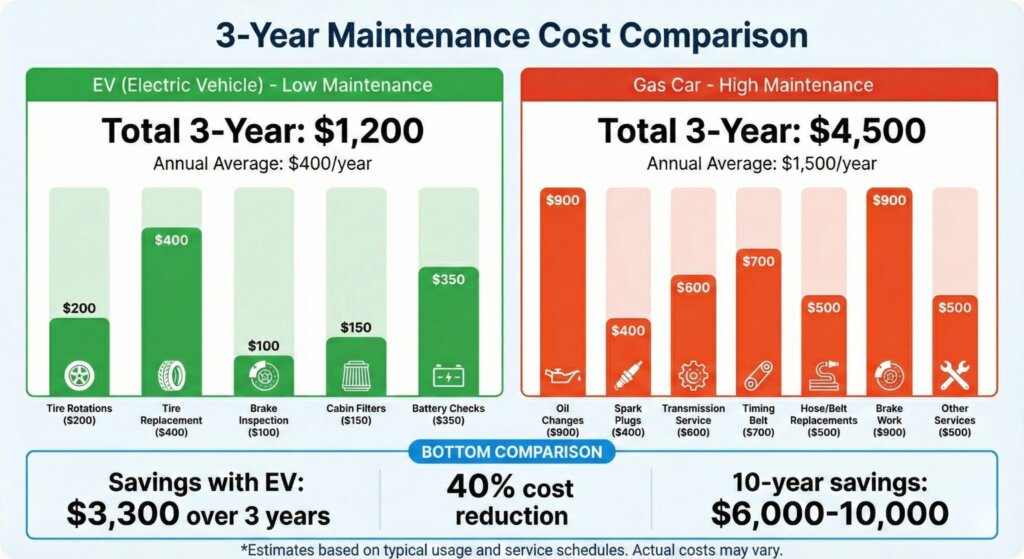
Let me break this down with real numbers.
My three-year maintenance costs:
- Tire rotations: 6 × $100 = $600
- Tire replacement (38,000 miles): $800
- Brake inspection (3 times): $250
- Cabin air filter (1 replacement): $75
- Battery health checks (3 times): $150
- Brake fluid replacement: $100
- Various minor checks and inspections: $225
Total: $2,200 over three years = $733/year
Comparable gas car over three years:
- Oil changes (18 changes): $900
- Spark plugs (might need): $200
- Transmission fluid service: $250
- Coolant flush: $150
- Timing belt inspection/replacement: $500-1,500
- Hose and belt replacements: $300
- Brake work (heavier use): $400
- Air filters: $150
- Miscellaneous: $500
Total: $4,000-5,000 over three years = $1,300-1,700/year
My savings: $600-1,000 per year
Over the car’s 10-year life, that’s $6,000-10,000 in maintenance costs saved.
What maintenance tips & tricks should I focus on?
Is cold weather bad for my battery?
Can I fast charge every day?
When do I need brake service?
Does hot weather damage the battery?
Should I top off my charge every day?
What if I run out of battery?
Are EV repairs expensive?
Why These Savings Matter
These numbers aren’t just my experience—they represent typical EV ownership economics. When evaluating the total cost of ownership for electric vehicles over their 10-year lifespan, maintenance costs represent one of the most significant advantages compared to internal combustion engines.
The government and independent researchers have confirmed through comprehensive studies that EV ownership results in substantially lower total cost of ownership, with maintenance being a major factor in these savings.
What I Wish I Knew from Day One
Looking back at three years, here’s my advice for new EV owners.
- Don’t obsess over the battery. It’s tougher than you think. Modern batteries lose 1-2% capacity per year. After 10 years, you’ll have 80-90% capacity. That’s fine.
- Find an EV shop early. Not all mechanics understand EVs. Find someone certified. Then stick with them.
- Keep a simple maintenance log. Track tire rotations, costs, services. You’ll understand your car’s patterns.
- Charge to 80% most days. This single habit is the most important thing. It extends everything. Battery health, car lifespan, everything.
- Don’t skip software updates. Updates improve battery management, charging efficiency, and fix bugs. Always apply them.
- Get your tires rotated regularly. This is your real maintenance job. Tires wear faster on EVs. Rotation is critical.
- Check tire pressure monthly. Even 3 PSI low reduces range noticeably. Takes two minutes monthly.
- Don’t waste money on unnecessary services. You don’t need oil changes. You don’t need spark plug service. You don’t need transmission flushes. That’s money saved.
The Real Truth About Electric Car Maintenance Tips & Tricks
Here’s what nobody tells you.
EV maintenance is easier than gas car maintenance. A lot easier.
You’ll save thousands of dollars over the car’s life. Thousands.
Your battery will last longer than you think. Probably outlast the car.
The worst thing you can do is worry about maintenance instead of enjoying your car.
Electric car maintenance tips & tricks aren’t complicated. They’re actually simpler.

Leave a Reply