
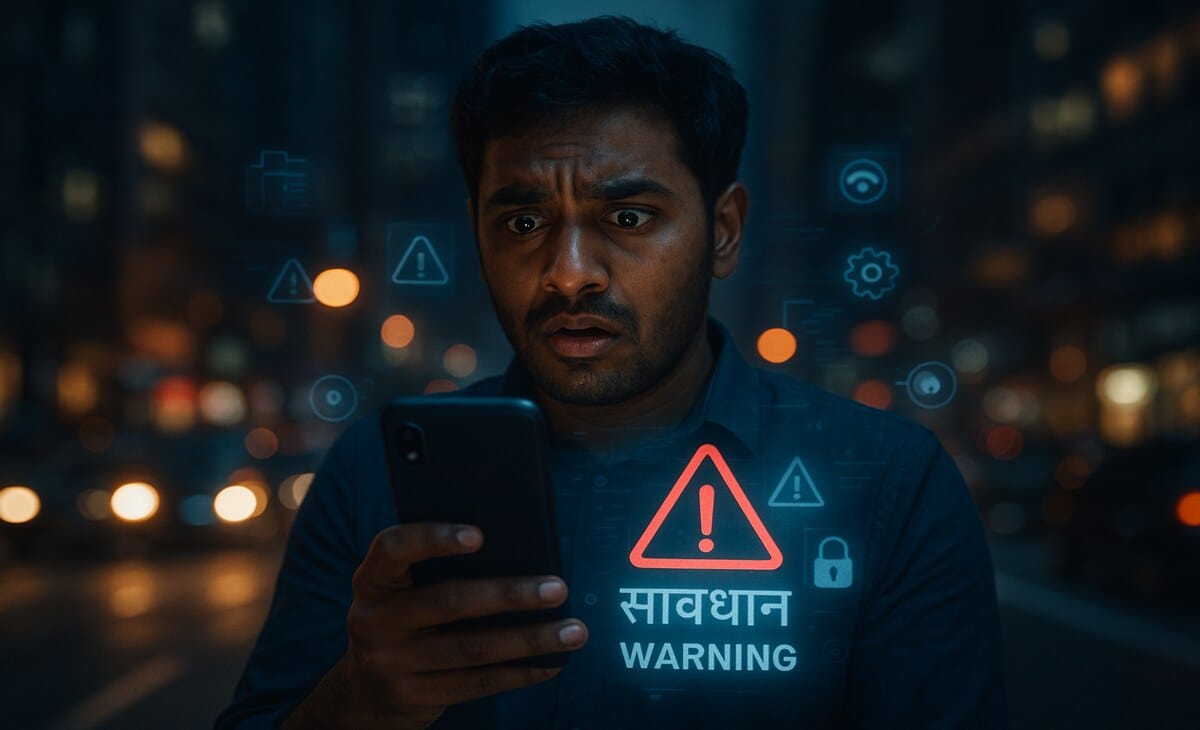

India’s digital economy explodes every year. But so do scams. People report phone fraud, fake apps, and stolen passwords all the time. On November 20th, 2025, Google said they are bringing more AI protection for Indian users. But even smart tech leaves big holes open, researchers warn.
Key Points
- Google launches Gemini Nano scam detection for Pixel 9 (English only)
- Screen sharing scam warnings in Google Pay, Paytm, Navi apps (Android 11+)
- Play Protect blocks 115 million risky sideloaded apps
- Big challenges: regional languages, older devices, Play Store fake app issues remain
- DigiKavach and Super Searchers push digital education
- New SIM-based verification, SynthID deepfake detector technology
- Most protections off by default; users must enable manually
- India called “the proving ground” for global digital safety
On-device scam detection launches—But only for few users
Google’s new scam-fighting tech uses AI right on Pixel 9 devices. Gemini Nano scans calls from unknown numbers and beeps if it sees a scam. But wait, most folks in India don’t own Pixel phones. Android runs on almost every smartphone here, but Google’s Pixel? Less than 1% have those, experts say. And this new protection only speaks English. Most people, they talk in their own language. So, a lot of people were left out. No solution for Hindi or Tamil or Telugu or Kannada today. Google says more phones and languages are coming “later,” but gives no date.
Financial app partnerships—Screen sharing alerts
Scammers often trick people into sharing screens while using payment apps. Suddenly, crooks see your PIN and OTP codes. Google tested new alerts with apps like Google Pay, Paytm, and Navi. When a person starts sharing their screen during a call, a warning pops up. With one tap, the user can hang up and end the screen share. Only works for phones with Android 11 or higher. Most older mobiles? No support. Google says they’ll add Hindi and other languages, but so far, only English.
Blocking risky apps—Big improvement
Google Play Protect blocked more than 115 million attempts for dangerous apps in India this year. Crooks love sideloading apps asking for many permissions—bank details, SMS, and contacts. Google now blocks lots of them. Google Pay pushes over one million scam warnings every week. That’s a lot! But experts warn, many fake apps still slip by. Banks and security teams have flagged scams that sat on the Play Store for weeks before they were removed.
Raising scam awareness
Google spends money on big education campaigns. DigiKavach teaches Indians what scams look like and how to report problems. The program has reached more than 250 million people across cities and villages. The Super Searchers project trained teachers and parents to spot fraud in schools. CyberPeace Foundation was awarded $200,000 by Google, building AI-powered safety tools for schools and hackathons.
New tech for better identity checks
New SIM-based phone number verification replaces old, weak SMS OTP. People sign in with more secure checks now. Google worked with India’s Reserve Bank to publish a safe lending apps list to block fake loan sharks. SynthID Detector API now helps news and social media sites spot AI deepfakes.
But serious gaps stay
Security researchers and police say scammers still outsmart tech. Google and Apple sometimes let fake apps into their stores, even with strict review. Regional languages, old Android phones, and people without literacy—most stay weak. For those not using Pixel, there is no Gemini Nano scam detector at all. Updates are slow to reach “the next billion” users. Scams mutate fast; Google’s AI catches some, misses many.
What comes next?
Google says, “India is a proving ground for global safety.” If tools work here, maybe they’ll expand worldwide. But for now, everyone—users, banks, and tech companies—needs to stay watchful. Protections are off by default. Turn them on if you can. Better fraud tools arrive slowly. Scammers don’t wait.

Leave a Reply