
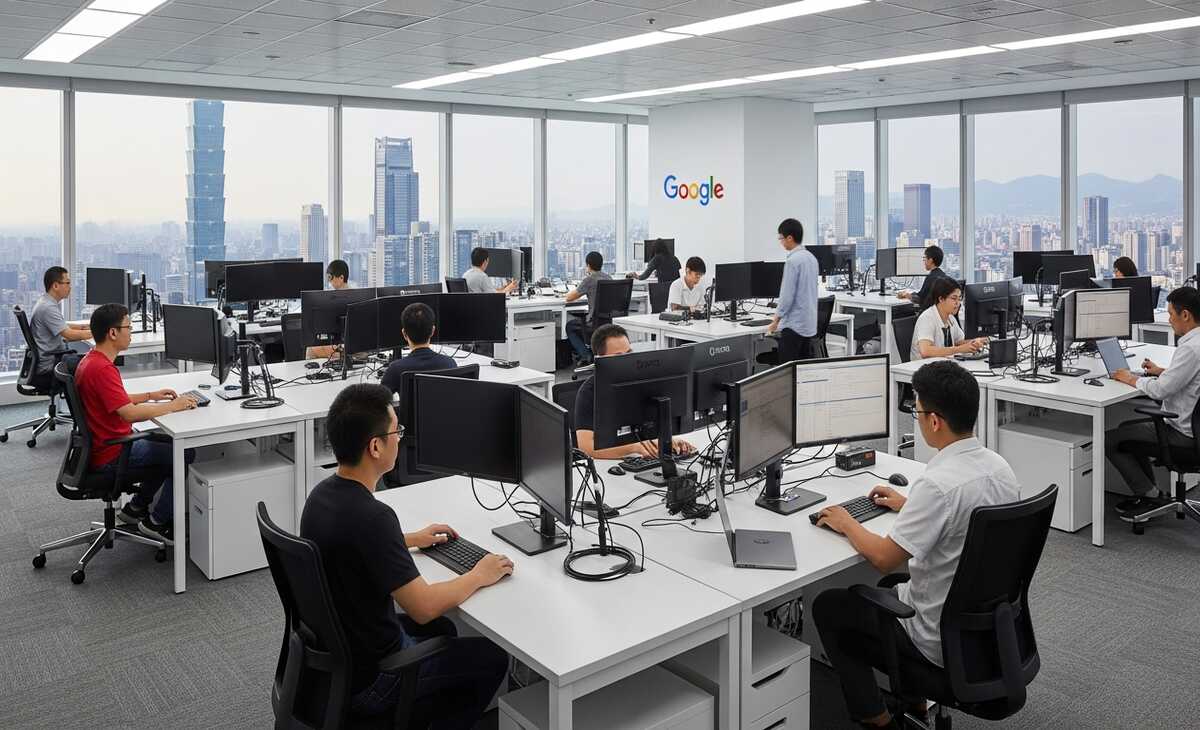

Google officially opened its new AI infrastructure hardware engineering centre in Taipei. Big deal? Yes. This spot is now the largest Google AI hub outside the United States. Taiwan just got a massive vote of trust from one of the world’s most important tech giants.
The opening ceremony was packed. Taiwan’s President Lai Ching-te was beaming, U.S. diplomats praised the move, and every major local tech outlet was buzzing. President Lai doubled down: “Taiwan is a vital part of the tech chain. Now, it’s a top centre for building secure, trusted AI.”
Just last year, Google’s Taiwan team tripled in size. Hundreds of engineers are setting up to work on integrating AI chips (Google’s TPUs), fitting them into motherboards, and getting them into hyperscale data centers worldwide. The new hub is a key driver for Google’s Gemini AI, Search, YouTube, and future products.
Why Taiwan? Why Now?
- Taiwan is home to TSMC, the world’s biggest chipmaker.
- Local universities turn out top-notch AI and hardware engineers faster than anywhere else in Asia-Pacific.
- Strong U.S.–Taiwan relations keep boosting international investment and innovation.
- Google sees Taiwan as secure, stable, and “the best partner for future tech builds.”
The Centre: Bigger Than an Office
Google’s Taipei AI hub isn’t just rows of desks and whiteboards. This place is where Google’s hardware and AI get road-tested, mass-produced, and deployed across global markets.
- Multidisciplinary teams work on everything from chip design to advanced server setups.
- Special focus on reliability, cybersecurity, and innovative hardware protocols.
- New tech born here will roll out to billions of users worldwide, from everyday smartphones to massive AI cloud stacks.
- Taipei’s data centers, run by Google since 2013, now get a major boost in both staff and new equipment.
Security, Trust, and U.S.–Taiwan Ties
Officials at the launch stressed security. Unlike AI systems coming out of China (which Taiwan bans in government use), this hub is seen as a safe, trusted alternative. The U.S. called the new hub “another golden era” for U.S.–Taiwan economic ties.
- The project signals long-term partnership, with “nine-figure” investments rumored over coming years.
- The U.S. said: “Building on years of innovation, we’re now in a new golden age in U.S.–Taiwan relations.”
Economic Boost & Jobs
- Google has directly created hundreds of high-value jobs in Taiwan, many in new AI disciplines.
- Local suppliers—from chipmakers to parts manufacturers—expect strong new demand.
- The government touts indirect effects: more foreign investment, upskilled workforce, rising tech exports.
What This Means: For Google, Taiwan, & The World
Google’s move isn’t just about new office space or more servers. It’s a huge bet on Asia-Pacific’s talent and the importance of trusted tech partnerships. For Google users, this means faster, smarter, and more secure products. For Taiwan, it’s a milestone—proof they’re essential in the global innovation race.
At a Glance: Key Takeaways
- Biggest Google AI hub outside the US: Located in Taipei, hundreds of engineers.
- Integration focus: Google TPU AI chips get built and tested here, then go to global data centers.
- Leader comments: Both Taiwan’s president and US officials see this as a deepening of vital tech ties.
- Local impact: New jobs, tech investment, and worldwide attention on Taiwan’s expertise.
- Global effect: Hardware and AI work from Taipei will power billions of devices around the world.

Leave a Reply