
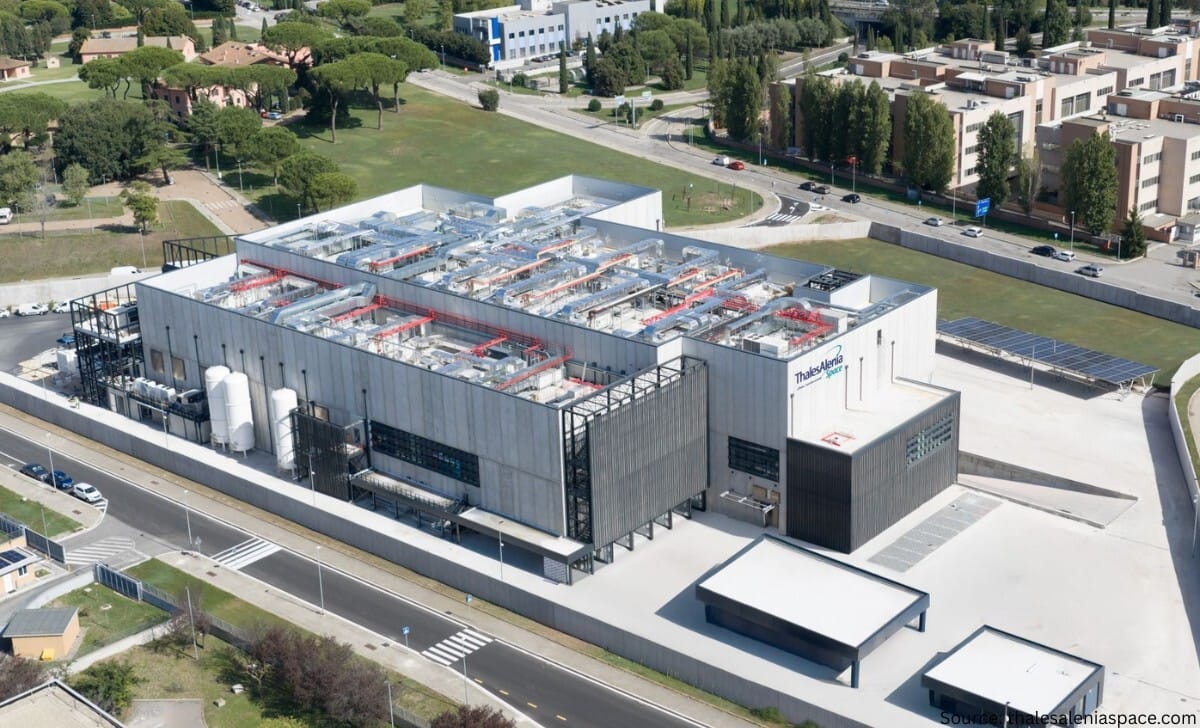

Italy got its own shiny new Space Smart Factory. President Sergio Mattarella, famous folks from Leonardo, Thales, and the Italian Space Agency showed up for a celebration. The factory sits on the edge of Rome at Tecnopolo Tiburtino, a special place for tech stuff and lots of businesses.
This huge place cost €100 million. That’s a bunch of cash. Some came from Italy’s own money and some from Europe’s COVID recovery fund. Thales and Leonardo helped too. The whole idea? Make lots of satellites—around 100 every year. They want Europe to match super-space countries like China and the United States. Elon Musk’s SpaceX has lots of satellites already. Italy wants to catch up.
The Space Smart Factory makes different types of satellites. Some are for civilians, like watching Earth, helping with phones, and giving locations. Others help the military. The cleanrooms in the factory get set up and switched around super-fast. Robots and cobots do much of the work, moving satellite parts all day. Engineers work in flexible teams, making testing and building quicker than before.
Why did Italy build this place? Europe needs satellites for lots of things—monitoring disasters, sending signals, checking the weather, and navigation. Leaders say they want to be global champions, not just local players. This factory brings together over 150 small and medium companies, plus big brands like Leonardo and Thales. Even universities like Politecnico di Milano and La Sapienza join in. The site is open for research, lessons, and training future experts.
The building itself does smart stuff: it saves power with solar panels, uses rainwater, and keeps working even during power outages, thanks to a 4.5 MW redundant backup. It’s green and modern, with LEED certification for energy efficiency. The design came from eos s.r.l., and projects were managed by top Italian companies.
The first projects inside? Sicral 3 defense satellite, Copernicus satellites (these track nature and climate), and Galileo satellites (Europe’s own GPS for navigation). Soon, big batches of satellites will get tested and launched from here. Italy’s aiming for hundreds every few years.
Adolfo Urso, Minister for Enterprises and Made in Italy, said that the factory isn’t just a tech place—it’s proof that Italy’s public and private sides work together well. Their goal: keep more tech jobs, build new products, and grow a national skill base. Hervé Derrey, Thales Alenia Space’s CEO, said this site will boost European projects and national plans for space. Europe’s key space efforts rely on Italy’s new production power.
People inside the business talk about “serialization.” That means doing lots of the same work quickly, like car factories do, but for satellites. Now, Italy can make over 100 satellites—up to 300 kg each—every year and can add more when needed. For big satellite constellations, Italy will be right there—building, testing, and launching.
Old factories nearby, including the Satellite Integration Center, already built famous navigation and communication satellites. Now, with this new Space Smart Factory, Italy adds more capacity. Teams can meet tight deadlines, use digital twins and virtual reality for testing, and connect with suppliers quickly.
The Space Joint Lab is another cool part. It lets small companies, startups, and students use factory tools and learn, invent, and improve new space ideas. The factory also backs top sustainability goals—lowering energy use, recycling rainwater, and always finding new green ideas.
Big companies aren’t done expanding. Thales Alenia Space, Leonardo, and Airbus chat about making a bigger European satellite company soon. They say numbers need crunching, and deals may happen in weeks. When everything’s done, Italy’s plant could make even more satellites, keeping up with world leaders.
For now, Italy stands out in Europe’s space effort. High-tech jobs growing. More satellites flying into orbit. Faculties, students, small brands, and huge companies all building together. The Space Smart Factory means Italy’s aiming high, making sure Europe leads in space for years.
(Source: thalesaleniaspace, thalesgroup)

Leave a Reply