
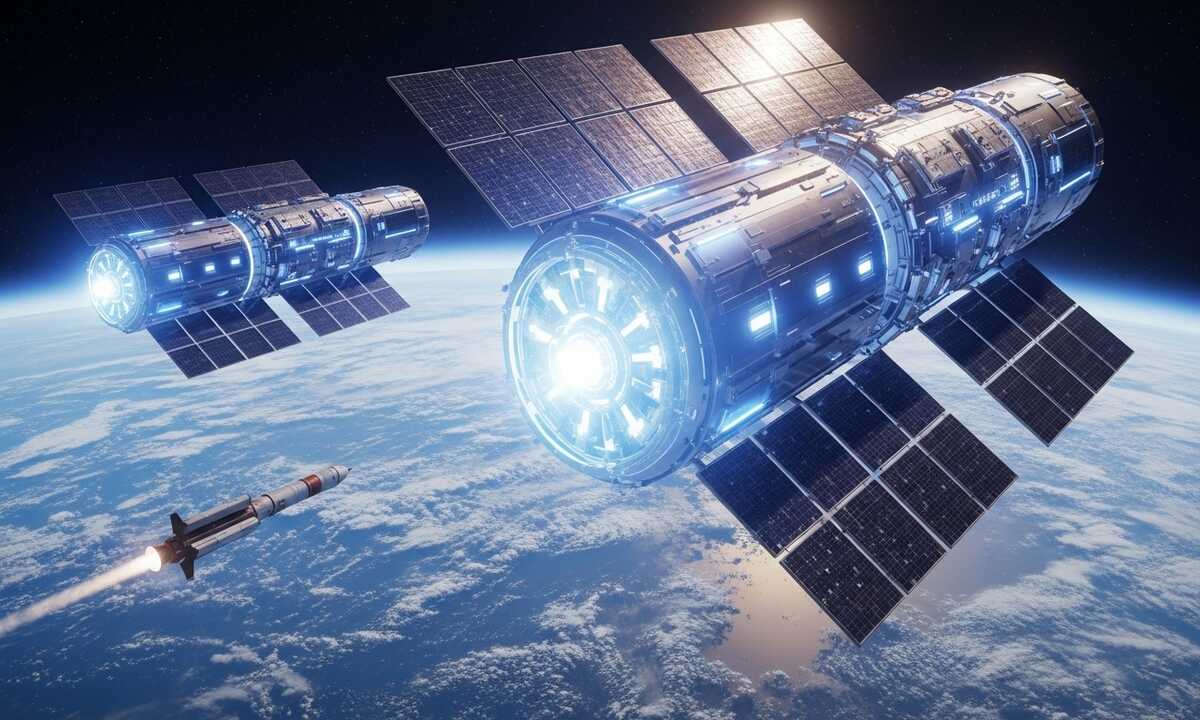

Imagine looking up one night and knowing there’s not only satellites up there, but giant computers churning away, right in Earth’s orbit. Sound wild? Jeff Bezos, boss and founder of Amazon, says it’s not just possible, it’s actually likely. Maybe starting a decade from now, he reckons. At a tech event in Turin, Italy, he told a crowd that huge, high-tech data centers might one day float in the sky above us, doing all kinds of number crunching without ever touching dirt.
Why Space for Data Centers?
Folks everywhere need more computing. AI’s on the rise, and cloud services are gobbling up power. Down here, it needs a ton of electricity (and water) to keep huge server rooms from melting down. “These giant training clusters,” Bezos called ’em, would be way better off in space, where the sun shines 24/7. No clouds, no rain, never any weather to knock things offline or slow cooling. That means less cost to run and, if he’s right, beating even the cheapest data centers on Earth within 20 years.
Bezos Lays Out the Timeline
The Internet’s old, but in the last few years, AI and big machines got bigger and hungrier, fast. That’s why Bezos dropped this idea now. “It’s hard to know exactly when,” he said, but sometime between 2035 and 2045, he’s betting this crazy-sounding dream could become reality. Maybe, but maybe not, some experts say. Even he wasn’t rock solid certain on dates. He’s just super sure it’ll happen.
Energy, Environment, and Economic Factors
Think about it: Space got unlimited sunlight and nowhere to plug in. But if you put a solar panel up there, it can power your data center without a single cloud blocking it. Here, city power lines got limits. Out there? Sun, free and all the time.
But there’s other stuff. On Earth, big data centers use millions of liters of water to stay cool. Water’s everywhere down here. In space? Cooling with vacuum and space-age tech—not water—opens new doors and new engineering headaches.
Still, energy is the big cost driver. Around-the-clock sunlight up in orbit could cut electricity bills, slice carbon emissions, and help companies meet green targets. Bezos suggests these “space computers” could one day be cheaper than regular ones, which might boost profits, too.
Big Obstacles Out There
It’s not all sunshine and rainbows, even up there. Getting these monsters into space? Crazy hard and super expensive. A rocket launch isn’t cheap. Goof just once—boom, millions lost in the blink of an eye.
Fixing stuff? Upgrading? Not so easy when your server rack’s whizzing around at thousands of kilometers an hour. Crews can’t just pop in for a fix—need robots or maybe astronauts. Launch costs, risks, and the huge upfront investment could hold things back. One failed rocket could mean years of lost time and cash.
Then there’s space trash. Orbit’s already crowded. Data center satellites gotta dodge everything from paint flakes to old rocket parts. No one wants a service outage—or worse—when a big solar paneled “cloud computer” gets clipped by flying junk.
Will Tech Giants Join the Race?
It’s more than just an Amazon dream. Other tech giants, eyeing the same energy, cost, and carbon headaches, might try to float their own computing power above the clouds. Some experts say: if one firm does it, the rest won’t wait long to follow.
NASA, ESA, and China’s space folks…all could get involved. Partnerships between tech and space industries could push this forward. It only works if these new-fangled space computers make real money and don’t eat more than they save.
Looking Back – and Forward
Remember, satellites brought us weather maps, TV, global chats. Now, data centers up high could bring us greener AI and cheaper cloud power for our phones, cars, and smart gadgets.
Still, even Bezos admits space computers won’t fix everything overnight. It’s one step in tech’s wild dance. Some folks worry about jobs, cost overruns, or risky launches, but Bezos says the upside’s too big to ignore. Like with the web boom, we’ll see bubbles and crashes—but the best ideas, he thinks, will survive.
Space data centers might sound nuts today. But so did moon landings once. Keep watching the sky: Someday, your favorite app’s brain might be humming thousands of miles above your head—and nobody but a few rocket engineers would ever know.
(Source: timesofindia, reuters, ainvest)

Leave a Reply